« Return to all search results
Title Search Results
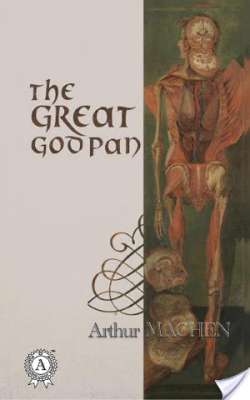
The Great God Pan" is a novella written by Arthur Machen. A version of the story was published in the magazine Whirlwind in 1890, and Machen revised and extended it for its book publication (together with another story, "The Inmost Light") in 1894. On publication it was widely denounced by the press as degenerate and horrific because of its decadent style and sexual content, although it has since garnered a reputation as a classic of horror. Machen’s story was only one of many at the time to focus on Pan as a useful symbol for the power of nature and paganism. The title was taken from the poem "A Musical Instrument" published in 1862 by Elizabeth Barrett Browning, in which the first line of every stanza ends "... the great god Pan.

Arun Khanna is a spy for the Indian government whose aid is enlisted to stop ISI Chief Ishak Khan. Khan is trying to build a nuclear bomb with which he can liberate Kashmir from the Indians. A battle of wits ensues. When Khan detonates a bomb at Khanna's engagement party to a fellow spy, Khanna's resolve is only strengthened. Now not only does he have to fight Khan, but he also has to track down his missing fiancee.
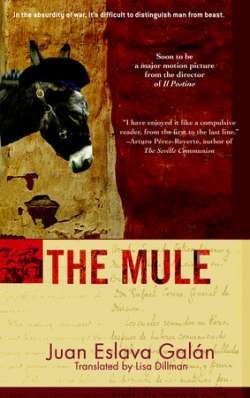
Critically acclaimed throughout Spain, and now available for the first time in English, this tender, satirical novel vividly captures the intrinsic absurdity of war—and the joys of true friendship in a place where it is difficult to distinguish man from beast.Juan Castro Pérez is a simple muleteer caught in the brutal Spanish Civil War. Never far from his closest companion—a stray mule named Valentina whom he is determined to keep for himself after the war—Juan engages in the low-brow drinking escapades, long shots at love, and an otherwise droning existence shared by his compatriots.As he lies, cheats, and steals to protect Valentina during his improbable odyssey home, Juan unwittingly “fights” for both sides—and becomes a reluctant and unlikely hero of the people, exploited by opportunistic journalists desperately trying to convince the Spanish public that the war is under control, when it is anything but….

Wall Street is being occupied. Europe is collapsing in on itself. Around the world, people are consumed by fear and anger, and one question is on everyone's lips: Is the financial crisis over, or are we headed towards economic disaster? documentary that chronicles the global financial collapse. Told in an entertaining and easy to follow style, the film tells the story of how the world came to be in such a state, from the seeds sown after WW2, to the current troubles facing us today, and to the possible future that may await us all. Also asks influential members of the finance and investment communities for their predictions on the world's financial future.

Astrologer, fortuneteller, and self-styled detective Kiyoshi Mitarai must in one week solve a macabre murder mystery that has baffled Japan for 40 years. Who murdered the artist Umezawa, raped and killed his daughter, and then chopped up the bodies of six others to create Azoth, the supreme woman? With maps, charts, and other illustrations, this story of magic and illusion, pieced together like a great stage tragedy, challenges the reader to unravel the mystery before the final curtain.

A fascinating exploration of slavery and its laws and an unforgettable portrait of a young woman in pursuit of freedom. “Reads like a legal thriller” (The Washington Post). It is a spring morning in New Orleans, 1843. In the Spanish Quarter, on a street lined with flophouses and gambling dens, Madame Carl recognizes a face from her past. It is the face of a German girl, Sally Miller, who disappeared twenty-five years earlier. But the young woman is property, the slave of a nearby cabaret owner. She has no memory of a “white” past. Yet her resemblance to her mother is striking, and she bears two telltale birthmarks. In brilliant novelistic detail, award-winning historian John Bailey reconstructs the exotic sights, sounds, and smells of mid-nineteenth-century New Orleans, as well as the incredible twists and turns of Sally Miller’s celebrated and sensational case. Did Miller, as her relatives sought to prove, arrive from Germany under perilous circumstances as an indentured servant or was she, as her master claimed, part African, and a slave for life? The Lost German Slave Girl is a tour de force of investigative history that reads like a suspense novel. “Bailey keeps us guessing until the end in this page-turning true courtroom drama of 19th-century New Orleans . . . [He] brings to life the fierce legal proceedings with vivid strokes.” —Publishers Weekly (starred review)

The Chyrsalids is set in the future after a devastating global nuclear war. David, the young hero of the novel, lives in a tight-knit community of religious and genetic fundamentalists, always on the alert for any deviation from the norm of God’s creation. Abnormal plants are publicly burned, with much singing of hymns. Abnormal humans (who are not really human) are also condemned to destruction—unless they succeed in fleeing to the Fringes, that Wild Country where, as the authorities say, nothing is reliable and the devil does his work. David grows up ringed by admonitions: KEEP PURE THE STOCK OF THE LORD; WATCH THOU FOR THE MUTANT.At first he does not question. Then, however, he realizes that the he too is out of the ordinary, in possession of a power that could doom him to death or introduce h im to a new, hitherto unimagined world of freedom.The Chrysalids is a perfectly conceived and constructed work form the classic era o science fiction, a Voltairean philosophical tale that has as much resonance in our own day, when religious and scientific dogmatism are both on the march, as when it was written during the cold war.
A Vintage Shorts “Short Story Month” Selection Wandering about the sleepy Connecticut town of his childhood, where residents lead lives of grueling boredom, a journalist reminisces about the Cabot children: Molly, a sweet girl and his first love; Geneva who pilfered her mother’s diamonds from the clothesline and ran off to the Middle East; Wallace, Mr. Cabot’s bastard son who lives in the tenements across the river; and the dwarf, Mrs. Cabot’s child from an earlier marriage. In this fabulous tale, the crown jewel of John Cheever’s Pulitzer Prize-winning collection The Stories of John Cheever, a man agonizes about class privilege and racism, confessing to the knowledge of a terrible crime and exposing a quiet American family’s darkest secrets. An ebook short.
NATIONAL BESTSELLERWinner of the Pulitzer PrizeWhen The Stories of John Cheever was originally published, it became an immediate national bestseller and won the Pulitzer Prize. In the years since, it has become a classic. Vintage Books is proud to reintroduce this magnificent collection.Here are sixty-one stories that chronicle the lives of what has been called "the greatest generation." From the early wonder and disillusionment of city life in "The Enormous Radio" to the surprising discoveries and common mysteries of suburbia in "The Housebreaker of Shady Hill" and "The Swimmer," Cheever tells us everything we need to know about "the pain and sweetness of life."From the Trade Paperback edition.
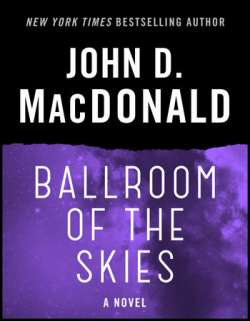
Ballroom of the Skies, a classic science fiction novel from John D. MacDonald, the beloved author of Cape Fear and the Travis McGee series, is now available as an eBook. Have you ever stopped to wonder why the world is eternally torn by war? Why men of goodwill, seeking only peace, are driven relentlessly to further disaster? In a future society, where India rules the globe and everyone chases the mighty rupee, the First Atomic War has just ended. Already the Second is clearly building. People shrug. War is man’s nature, they think. And that’s what newspaper reporter Dake Lorin thinks, too . . . until he becomes aware of the aliens living among us and discovers their sinister purpose—as well as the strange and monstrous explanation for humankind’s seemingly limitless capacity for violence and destruction. Features a new Introduction by Dean Koontz Praise for John D. MacDonald “The great entertainer of our age, and a mesmerizing storyteller.”—Stephen King “My favorite novelist of all time.”—Dean Koontz “To diggers a thousand years from now, the works of John D. MacDonald would be a treasure on the order of the tomb of Tutankhamen.”—Kurt Vonnegut “A master storyteller, a masterful suspense writer . . . John D. MacDonald is a shining example for all of us in the field. Talk about the best.”—Mary Higgins Clark