« Return to all search results
Title Search Results

Why does God exist? How have the three dominant monotheistic religions—Judaism, Christianity, and Islam—shaped and altered the conception of God? How have these religions influenced each other? In this stunningly intelligent book, Karen Armstrong, one of Britain's foremost commentators on religious affairs, traces the history of how men and women have perceived and experienced God, from the time of Abraham to the present. The epic story begins with the Jews' gradual transformation of pagan idol worship in Babylon into true monotheism—a concept previously unknown in the world. Christianity and Islam both rose on the foundation of this revolutionary idea, but these religions refashioned 'the One God' to suit the social and political needs of their followers. From classical philosophy and medieval mysticism to the Reformation, Karen Armstrong performs the near miracle of distilling the intellectual history of monotheism into one superbly readable volume, destined to take its place as a classic. Praise for History of God “An admirable and impressive work of synthesis that will give insight and satisfaction to thousands of lay readers.”—The Washington Post Book World “A brilliantly lucid, spendidly readable book. [Karen] Armstrong has a dazzling ability: she can take a long and complex subject and reduce it to the fundamentals, without oversimplifying.”—The Sunday Times (London) “Absorbing . . . A lode of learning.”—Time “The most fascinating and learned study of the biggest wild goose chase in history—the quest for God. Karen Armstrong is a genius.”—A.N. Wilson, author of Jesus: A Life
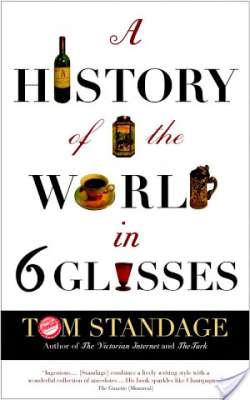
Whatever your favourite tipple, when you pour yourself a drink, you have the past in a glass. You can likely find them all in your own kitchen — beer, wine, spirits, coffee, tea, cola. Line them up on the counter, and there you have it: thousands of years of human history in six drinks. Tom Standage opens a window onto the past in this tour of six beverages that remain essentials today. En route he makes fascinating forays into the byways of western culture: Why were ancient Egyptians buried with beer? Why was wine considered a “classier” drink than beer by the Romans? How did rum grog help the British navy defeat Napoleon? What is the relationship between coffee and revolution? And how did Coca-Cola become the number one poster-product for globalization decades before the term was even coined? From the Hardcover edition.
From Michael Cunningham, the Pulitzer Prize-winning author of The Hours, comes this widely praised novel of two boyhood friends: Jonathan, lonely, introspective, and unsure of himself; and Bobby, hip, dark, and inarticulate. In New York after college, Bobby moves in with Jonathan and his roommate, Clare, a veteran of the city's erotic wars. Bobby and Clare fall in love, scuttling the plans of Jonathan, who is gay, to father Clare's child. Then, when Clare and Bobby have a baby, the three move to a small house upstate to raise "their" child together and, with an odd friend, Alice, create a new kind of family. A Home at the End of the World masterfully depicts the charged, fragile relationships of urban life today.

BREAKING NEWS: Amanda Lindhout’s lead kidnapper, Ali Omar Ader, has been caught. Amanda Lindhout wrote about her fifteen month abduction in Somalia in A House in the Sky. It is the New York Times bestselling memoir of a woman whose curiosity led her to the world’s most remote places and then into captivity: “Exquisitely told…A young woman’s harrowing coming-of-age story and an extraordinary narrative of forgiveness and spiritual triumph” (The New York Times Book Review). As a child, Amanda Lindhout escaped a violent household by paging through issues of National Geographic and imagining herself visiting its exotic locales. At the age of nineteen, working as a cocktail waitress, she began saving her tips so she could travel the globe. Aspiring to understand the world and live a significant life, she backpacked through Latin America, Laos, Bangladesh, and India, and emboldened by each adventure, went on to Sudan, Syria, and Pakistan. In war-ridden Afghanistan and Iraq she carved out a fledgling career as a television reporter. And then, in August 2008, she traveled to Somalia—“the most dangerous place on earth.” On her fourth day, she was abducted by a group of masked men along a dusty road. Held hostage for 460 days, Amanda survives on memory—every lush detail of the world she experienced in her life before captivity—and on strategy, fortitude, and hope. When she is most desperate, she visits a house in the sky, high above the woman kept in chains, in the dark. Vivid and suspenseful, as artfully written as the finest novel, A House in the Sky is “a searingly unsentimental account. Ultimately it is compassion—for her naïve younger self, for her kidnappers—that becomes the key to Lindhout’s survival” (O, The Oprah Magazine).
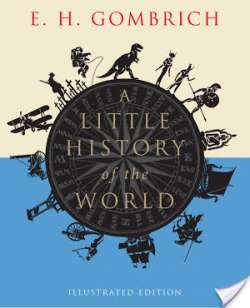
E. H. Gombrich's Little History of the World, though written in 1935, has become one of the treasures of historical writing since its first publication in English in 2005. The Yale edition alone has now sold over half a million copies, and the book is available worldwide in almost thirty languages. Gombrich was of course the best-known art historian of his time, and his text suggests illustrations on every page. This illustrated edition of the Little History brings together the pellucid humanity of his narrative with the images that may well have been in his mind's eye as he wrote the book. The two hundred illustrations—most of them in full color—are not simple embellishments, though they are beautiful. They emerge from the text, enrich the author's intention, and deepen the pleasure of reading this remarkable work. For this edition the text is reset in a spacious format, flowing around illustrations that range from paintings to line drawings, emblems, motifs, and symbols. The book incorporates freshly drawn maps, a revised preface, and a new index. Blending high-grade design, fine paper, and classic binding, this is both a sumptuous gift book and an enhanced edition of a timeless account of human history.

A Map Of The Harbor Islands is the long-awaited novel from J. G. Hayes, the critically acclaimed bestselling author of This Thing Called Courage and Now Batting for Boston. This book charts the turbulent life courses of two South Boston friends, Danny O'Connor and Petey Harding, from their childhoods through their adult lives. `Golden Boy' Petey has it all going for him - brains, charisma and his close friendship with Danny. Then an accident on the baseball field changes everything. Petey wakes from a coma a different person, completely different from the boy Danny knew and loved. Gone are the old habits, the old joy of baseball, the old way of thinking. Petey is left with a stutter and a new appreciation for life that Danny sometimes just cannot understand. Petey begins to tell stories and make maps - dragging a grudging Danny along. Over the years Danny begins to understand Petey, and slowly, he also begins to learn more about himself. Then Petey confesses that he is gay, which sends Danny on an odyssey he never dreamed could happen. Petey's map is one of hope for Danny and him, to escape the urban ghetto of South Boston. They are two wayfaring friends who swear a love for one another until the very end. A Map Of The Harbor Islands carries the reader on a journey into the beauty of the world, physically and emotionally, along a current of love, friendship, self-growth and redemption.
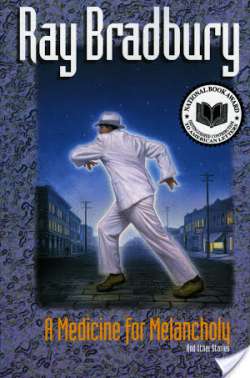
Ray Bradbury is a painter who uses words rather than brushes--for he created lasting visual images that, once observed, are impossible to forget. Sinister mushrooms growing in a dank cellar. A family's first glimpse at Martians. A wonderful white vanilla ice-cream summer suit that changes everyone who wears it. A great artist drawing in the sand on the beach. A clunky contraption made out of household implements to help some kids play a game called Invasion. The most marvelous Christmas display a little boy ever saw. All those images and many more are inside this book, a new trade edition of thirty-one of Bradbury's most arresting tales--timeless short fiction that ranges from the farthest reaches of space to the innermost stirrings of the heart. Ray Bradbury is known worldwide as one of the century's great men of imagination. Here are thirty-one reasons why.Ray Bradbury is a painter who uses words rather than brushes--for he created lasting visual images that, once observed, are impossible to forget. Sinister mushrooms growing in a dank cellar. A familys first glimpse at Martians. A wonderful white vanilla ice-cream summer suit that changes everyone who wears it. A great artist drawing in the sand on the beach. A clunky contraption made out of household implements to help some kids play a game called Invasion. The most marvelous Christmas display a little boy ever saw. All those images and many more are inside this book, a new trade edition of thirty-one of Bradburys most arresting tales--timeless short fiction that ranges from the farthest reaches of space to the innermost stirrings of the heart. Ray Bradbury is known worldwide as one of the centurys great men of imagination. Here are thirty-one reasons why.
WINNER OF THE PULITZER PRIZE Drawing on the diaries of one woman in eighteenth-century Maine, this intimate history illuminates the medical practices, household economies, religious rivalries, and sexual mores of the New England frontier. Between 1785 and 1812 a midwife and healer named Martha Ballard kept a diary that recorded her arduous work (in 27 years she attended 816 births) as well as her domestic life in Hallowell, Maine. On the basis of that diary, Laurel Thatcher Ulrich gives us an intimate and densely imagined portrait, not only of the industrious and reticent Martha Ballard but of her society. At once lively and impeccably scholarly, A Midwife's Tale is a triumph of history on a human scale. From the Trade Paperback edition.
The acclaimed New York Times bestseller by Sue Klebold, mother of one of the Columbine shooters, about living in the aftermath of Columbine. On April 20, 1999, Eric Harris and Dylan Klebold walked into Columbine High School in Littleton, Colorado. Over the course of minutes, they would kill twelve students and a teacher and wound twenty-four others before taking their own lives. For the last sixteen years, Sue Klebold, Dylan’s mother, has lived with the indescribable grief and shame of that day. How could her child, the promising young man she had loved and raised, be responsible for such horror? And how, as his mother, had she not known something was wrong? Were there subtle signs she had missed? What, if anything, could she have done differently? These are questions that Klebold has grappled with every day since the Columbine tragedy. In A Mother’s Reckoning, she chronicles with unflinching honesty her journey as a mother trying to come to terms with the incomprehensible. In the hope that the insights and understanding she has gained may help other families recognize when a child is in distress, she tells her story in full, drawing upon her personal journals, the videos and writings that Dylan left behind, and on countless interviews with mental health experts. Filled with hard-won wisdom and compassion, A Mother’s Reckoning is a powerful and haunting book that sheds light on one of the most pressing issues of our time. And with fresh wounds from the Newtown and Charleston shootings, never has the need for understanding been more urgent. All author profits from the book will be donated to research and to charitable organizations focusing on mental health issues. — Washington Post, Best Memoirs of 2016
Diane Ackerman's lusciously written grand tour of the realm of the senses includes conversations with an iceberg in Antarctica and a professional nose in New York, along with dissertations on kisses and tattoos, sadistic cuisine and the music played by the planet Earth. “Delightful . . . gives the reader the richest possible feeling of the worlds the senses take in.” —The New York Times