« Return to all search results
Title Search Results
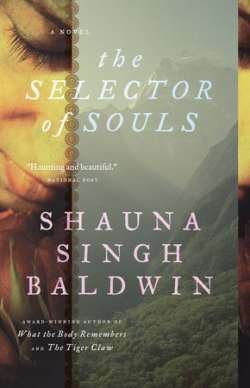
The Selector of Souls begins with a scene that is terrifying, harrowing and yet strangely tender: we're in the mid ranges of the Himalayas as a young woman gives birth to her third child with the help of her mother, Damini. The birth brings no joy, just a horrible accounting, and the act that follows--the huge sacrifice made by Damini out of love of her daughter--haunts the novel.In Shauna Singh Baldwin's enthralling novel, two fascinating, strong-willed women must deal with the relentless logic forced upon them by survival: Damini, a Hindu midwife, and Anu, who flees an abusive marriage for the sanctuary of the Catholic church. When Sister Anu comes to Damini's home village to open a clinic, their paths cross, and each are certain they are doing what's best for women. What do health, justice, education and equality mean for women when India is marching toward prosperity, growth and becoming a nuclear power? If the baby girls and women around them are to survive, Damini and Anu must find creative ways to break with tradition and help this community change from within.
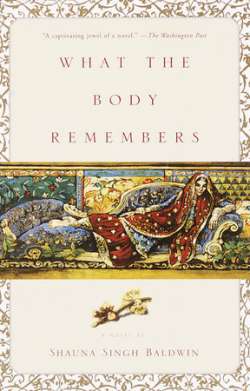
Out of the rich culture of India and the brutal drama of the 1947 Partition comes this lush and eloquent debut novel about two women married to the same man.Roop is a young girl whose mother has died and whose father is deep in debt. So she is elated to learn she is to become the second wife of a wealthy Sikh landowner in a union beneficial to both. For Sardaji’s first wife, Satya, has failed to bear him children. Roop believes that she and Satya, still very much in residence, will be friends. But the relationship between the older and younger woman is far more complex. And, as India lurches toward independence, Sardarji struggles to find his place amidst the drastic changes. Meticulously researched and beautifully written, What the Body Remembers is at once poetic, political, feminist, and sensual.
For years, predators like snow leopards and white-tipped sharks have been disappearing from the top of the food chain, largely as a result of human action. Science journalist Will Stolzenburg reveals why and how their absence upsets the delicate balance of the world's environment.
A Lambda Literary Awards Finalist Named one of the best books of 2017 by NPR's Book Concierge A revelatory narrative of the intersecting lives and works of revered authors Virginia Woolf, T. S. Eliot, E. M. Forster and D. H. Lawrence during 1922, the birth year of modernism The World Broke in Two tells the fascinating story of the intellectual and personal journeys four legendary writers, Virginia Woolf, T. S. Eliot, E. M. Forster, and D. H. Lawrence, make over the course of one pivotal year. As 1922 begins, all four are literally at a loss for words, confronting an uncertain creative future despite success in the past. The literary ground is shifting, as Ulysses is published in February and Proust’s In Search of Lost Time begins to be published in England in the autumn. Yet, dismal as their prospects seemed in January, by the end of the year Woolf has started Mrs. Dalloway, Forster has, for the first time in nearly a decade, returned to work on the novel that will become A Passage to India, Lawrence has written Kangaroo, his unjustly neglected and most autobiographical novel, and Eliot has finished—and published to acclaim—“The Waste Land." As Willa Cather put it, “The world broke in two in 1922 or thereabouts,” and what these writers were struggling with that year was in fact the invention of modernism. Based on original research, Bill Goldstein's The World Broke in Two captures both the literary breakthroughs and the intense personal dramas of these beloved writers as they strive for greatness.
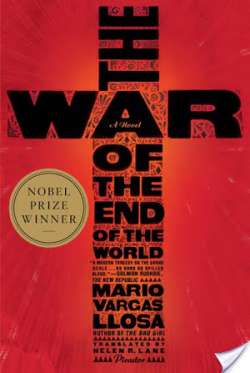
Deep within the remote backlands of nineteenth-century Brazil lies Canudos, home to all the damned of the earth: prostitutes, bandits, beggars, and every kind of outcast. It is a place where history and civilization have been wiped away. There is no money, no taxation, no marriage, no census. Canudos is a cauldron for the revolutionary spirit in its purest form, a state with all the potential for a true, libertarian paradise--and one the Brazilian government is determined to crush at any cost. In perhaps his most ambitious and tragic novel, Mario Vargas Llosa tells his own version of the real story of Canudos, inhabiting characters on both sides of the massive, cataclysmic battle between the society and government troops. The resulting novel is a fable of Latin American revolutionary history, an unforgettable story of passion, violence, and the devastation that follows from fanaticism.
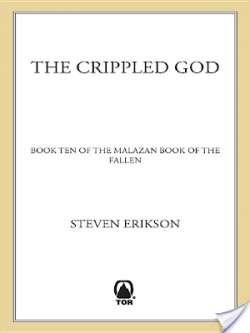
Savaged by the K'Chain Nah'Ruk, the Bonehunters march for Kolanse, where waits an unknown fate. Tormented by questions, the army totters on the edge of mutiny, but Adjunct Tavore will not relent. One final act remains, if it is in her power, if she can hold her army together, if the shaky allegiances she has forged can survive all that is to come. A woman with no gifts of magic, deemed plain, unprepossessing, displaying nothing to instill loyalty or confidence, Tavore Paran of House Paran means to challenge the gods – if her own troops don't kill her first. Awaiting Tavore and her allies are the Forkrul Assail, the final arbiters of humanity. Drawing upon an alien power terrible in its magnitude, they seek to cleanse the world, to annihilate every human, every civilization, in order to begin anew. They welcome the coming conflagration of slaughter, for it shall be of their own devising, and it pleases them to know that, in the midst of the enemies gathering against them, there shall be betrayal. In the realm of Kurald Galain, home to the long lost city of Kharkanas, a mass of refugees stand upon the First Shore. Commanded by Yedan Derryg, the Watch, they await the breaching of Lightfall, and the coming of the Tiste Liosan. This is a war they cannot win, and they will die in the name of an empty city and a queen with no subjects. Elsewhere, the three Elder Gods, Kilmandaros, Errastas and Sechul Lath, work to shatter the chains binding Korabas, the Otataral Dragon, from her eternal prison. Once freed, she will rise as a force of devastation, and against her no mortal can stand. At the Gates of Starvald Demelain, the Azath House sealing the portal is dying. Soon will come the Eleint, and once more, there will be dragons in the world. At the Publisher's request, this title is being sold without Digital Rights Management Software (DRM) applied.
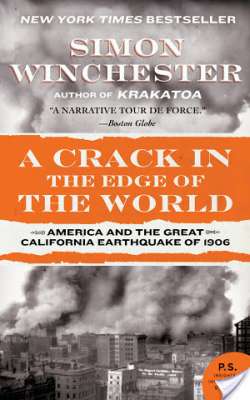
Unleashed by ancient geologic forces, a magnitude 8.25 earthquake rocked San Francisco in the early hours of April 18, 1906. Less than a minute later, the city lay in ruins. Bestselling author Simon Winchester brings his inimitable storytelling abilities to this extraordinary event, exploring the legendary earthquake and fires that spread horror across San Francisco and northern California in 1906 as well as its startling impact on American history and, just as important, what science has recently revealed about the fascinating subterranean processes that produced it—and almost certainly will cause it to strike again.
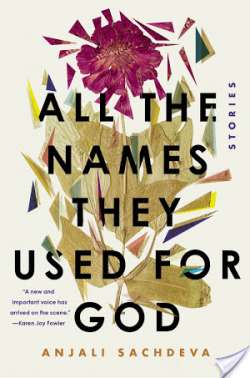
“One of the best collections I’ve ever read. Every single story is a standout.”—Roxane Gay “Fuses science, myth, and imagination into a dark and gorgeous series of questions about our current predicaments.”—Anthony Doerr, author of All the Light We Cannot See “Strange and wonderful . . . delightfully unexpected.”—The New York Times Book Review A dystopian tale about genetically modified septuplets who are struck by a mysterious illness; a love story about a man bewitched by a mermaid; a stirring imagining of the lives of Nigerian schoolgirls in the aftermath of a Boko Haram kidnapping. The stories in All the Names They Used for God break down genre barriers—from science fiction to American Gothic to magical realism to horror—and are united by each character’s brutal struggle with fate. Like many of us, the characters in this collection are in pursuit of the sublime. Along the way, they must navigate the borderland between salvation and destruction. NAMED A MUST-READ BOOK by Harper’s Bazaar, Entertainment Weekly, and AM New York, and a top read by Elle, Fast Company, The Christian Science Monitor, Bustle, Shondaland, Popsugar, Refinery29, Bookish, Newsday, The Millions, Asian American Writers’ Workshop, and HelloGiggles “Completing one [story] is like having lived an entire life, and then being born, breathless, into another.”—Carmen Maria Machado “Captivating.”—NPR “Gripping.”—Los Angeles Review of Books “[A] remarkable debut . . . Sachdeva is seemingly fearless and her talent limitless.”—AM New York “This phenomenal debut short-story collection is filled with stories that bring the otherworldly to life and examine the strangeness of humanity.”—Bustle “So rich they read like dreams . . . They are enormous stories, not in length but in ambition, each an entirely new, unsparing world. Beautiful, draining—and entirely unforgettable.”—Kirkus Reviews (starred review)
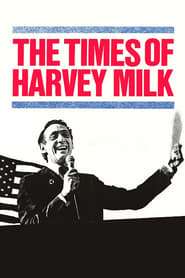
Harvey Milk was an outspoken human rights activist and one of the first openly gay U.S. politicians elected to public office; even after his assassination in 1978, he continues to inspire disenfranchised people around the world.
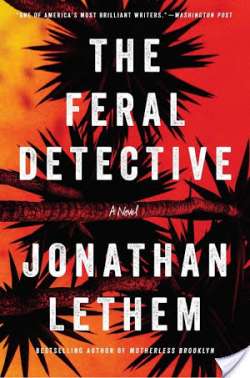
Jonathan Lethem’s first detective novel since Motherless Brooklyn “One of America’s greatest storytellers.” —Washington Post Phoebe Siegler first meets Charles Heist in a shabby trailer on the eastern edge of Los Angeles. She’s looking for her friend’s missing daughter, Arabella, and hires Heist to help. A laconic loner who keeps his pet opossum in a desk drawer, Heist intrigues the sarcastic and garrulous Phoebe. Reluctantly, he agrees to help. The unlikely pair navigate the enclaves of desert-dwelling vagabonds and find that Arabella is in serious trouble—caught in the middle of a violent standoff that only Heist, mysteriously, can end. Phoebe’s trip to the desert was always going to be strange, but it was never supposed to be dangerous. . . . Jonathan Lethem’s first detective novel since Motherless Brooklyn, The Feral Detective is a singular achievement by one of our greatest writers.