« Return to all search results
Title Search Results
The story of Joseon's tyrant king Yeonsan who exploits the populace for his own carnal pleasures, his seemingly loyal retainer who controls him and all court dealings, and a woman who seeks vengeance.
Once upon a time in rural Maine, a big black bear found a briefcase under a tree. Hoping for food, he dragged it into the woods, only to find that all it held was the manuscript of a novel. He couldn’t eat it, but he did read it, and decided it wasn’t bad. Borrowing some clothes from a local store, and the name Hal Jam from the labels of his favorite foods he headed to New York to seek his fortune in the literary world. Then he took America by storm. The Bear Went Over the Mountain is a riotous, magical romp with the buoyant Hal Jam as he leaves the quiet, nurturing world of nature for the glittering, moneyed world of man. With a pitch-perfect comic voice and an eye for social satire to rival Swift or Wolfe, bestselling author William Kotzwinkle limns Hal’s hilarious journey to New York, Los Angeles, and the great sprawling country in between, where a bear makes good despite his animal instincts, and where money-hungry executives see not a hairy beast with a purloined novel, but a rough-hewn, soulful, media-perfect nature guy who just might be the next Hemingway. By turns sidesplittingly funny, stingingly ironic, and unexpectedly tender, The Bear Went Over the Mountain captures the zeitgeist of the 1990s dead-on, in a delicious bedtime story for grown-ups.

Known for always saying the unexpected and telling it like it is, even at the expense of offending, Louisiana comedian Theo Von returns home to film his first stand-up comedy special for Netflix at the Civic Theater in New Orleans.
From one of America’s most acclaimed literary figures (“an important as well as brilliant novelist”—The New York Times Book Review) a major new novel that hilariously takes the pulse of our times.The unforgettable voyager of this dark comic journey is I. B. “Berl” Pickett, M.D., the die of whose uncharmed life was probably cast as soon as his mother got the bright idea to name him after Irving Berlin. The boyhood insults to any chance of normalcy piled on apace thereafter: the traumatizing, spasmodic spectacle of Pentecostalist Sunday worship; the socially inhibitory accompaniment of his parents on their itinerant rug-shampooing business; the undue technical advancement and emotional retardation that ensued from his erotic initiation at the hands of his aunt. What would have become of this soul had he not gone to medical school, thanks to the surrogate parenting of a local physician and solitary bird hunter? But there is meaning to life beyond professional accreditation, even in the noblest of callings. Berl’s been on a mission to find it these past few years, though with scant equipment or basis for hope. Hard to say (for the moment anyway) whether his mission has been aided or set back by his having fallen under suspicion of negligent homicide in the death of his former lover. All the same, being ostracized by virtually all his colleagues at the clinic gives him something to chew on: the reality of small-town living as total surveillance more than any semblance of fellowship, even among folks you’ve known your whole life.Fortunately, for Berl, it doesn’t take a village. And he will find his deliverance in continuing to practice medicine one way or another, as well as in the few human connections he has made, wittingly or not, over the years. The landscape, too, will furnish a hint in what might yet prove, if not a certifiable epiphany, a semi-spiritual awakening in I. B. Pickett, M.D., the inglorious but sole hero of Thomas McGuane’s uproarious and profound exploration of the threads by which we all are hanging.From the Hardcover edition.
"I bought the milk," said my father."I walked out of the corner shop, and heard a noise like this: T h u m m t h u m m.I looked up and saw a huge silver disc hovering in the air above Marshall Road.""Hullo," I said to myself. "That's not something you see every day.And then something odd happened."

'What made the orchard miraculous was an abandoned railway carriage, set down as if by magic, its wheels gone, anchored by long grass and nettles. Ruby and I stared at it and each other . . . dark-windowed, out of place in a thicket of thorns, it was the perfect hide-out, house, the camp of our dreams' When April's parents move from London to rural Kent she makes her first best friend. With flame-haired, fearless Ruby, April shares secrets, dares and laughter. But Ruby has secrets of her own -bruises that she hides. Also seeking April's friendship is old Mr Greenidge, immaculate in his linen suit, with eyes like blue glass. He follows her around the village with his beguiling dachshund, and wants to learn everything about her.

"There's a long drive. It's gonna be. I believe. The Giants win the pennant. The Giants win the pennant. The Giants win the pennant. The Giants win the pennant." -- Russ Hodges, October 3, 1951 On the fiftieth anniversary of "The Shot Heard Round the World," Don DeLillo reassembles in fiction the larger-than-life characters who on October 3, 1951, witnessed Bobby Thomson's pennant-winning home run in the bottom of the ninth inning. Jackie Gleason is razzing Toots Shor in Leo Durocher's box seats; J. Edgar Hoover, basking in Sinatra's celebrity, is about to be told that the Russians have tested an atomic bomb; and Russ Hodges, raw-throated and excitable, announces the game -- the Giants and the Dodgers at the Polo Grounds in New York. DeLillo's transcendent account of one of the iconic events of the twentieth century is a masterpiece of American sportswriting.
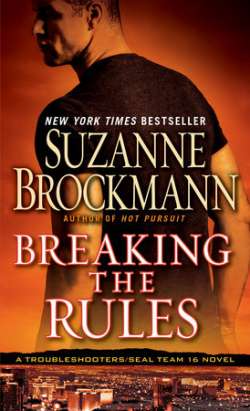
When Eden Gillman needed someone most, Navy SEAL Izzy Zanella was always there for her—offering a place to stay and a shoulder to cry on. And when she got pregnant with another man’s child, he offered his hand in marriage. Their life together seemed meant to be, until Eden’s miscarriage left them devastated and estranged. Yet in order to save Eden’s teenage brother, Ben, from his abusive stepfather, Eden once again reaches out to Izzy for help. He doesn’t hesitate to reach back, and there’s no denying the passion that still crackles between them. Together they wage a courtroom battle and win custody. But when Ben attracts some dangerous enemies, Izzy and Eden must pull together like never before and strike back, swift and hard, to protect their own—and everything they hold most precious.
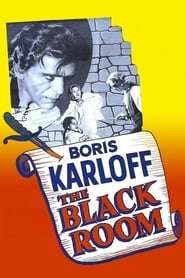
In a 16th-century European town, the ruling family has been given a prophecy that, should there ever be twin boys born, the younger will murder the older; so is dismayed when twins are born to the popular baron. The older grows to be a selfish, slovenly man, who inherits the castle at his father's death and becomes ruler over the formerly happy villagers. He enjoys his power until he learns his younger brother is returning from abroad and, afraid of the prophecy, he determines to murder his sibling, hide his body in the "black room" - an old torture chamber sealed away behind the fireplace - and then impersonate him, right down to his withered arm. In this way he hopes to not only avoid the prophecy, but also escape consequences of his other criminal deeds and obtain marriage to a local girl of the nobility...
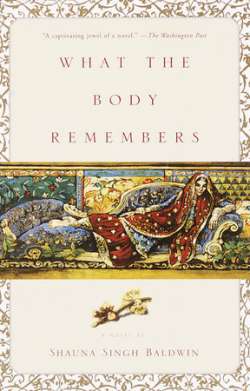
Out of the rich culture of India and the brutal drama of the 1947 Partition comes this lush and eloquent debut novel about two women married to the same man.Roop is a young girl whose mother has died and whose father is deep in debt. So she is elated to learn she is to become the second wife of a wealthy Sikh landowner in a union beneficial to both. For Sardaji’s first wife, Satya, has failed to bear him children. Roop believes that she and Satya, still very much in residence, will be friends. But the relationship between the older and younger woman is far more complex. And, as India lurches toward independence, Sardarji struggles to find his place amidst the drastic changes. Meticulously researched and beautifully written, What the Body Remembers is at once poetic, political, feminist, and sensual.