« Return to all search results
Title Search Results
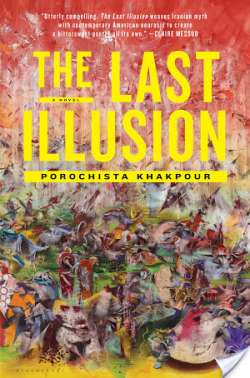
A kaleidoscopic tale inspired by a legend from the medieval Persian epic "Book of Kings" follows the coming-of-age of a feral Middle Eastern youth in New York City on the eve of the September 11 attacks. By the award-winning author of Sons and Other Flammable Objects. 25,000 first printing.
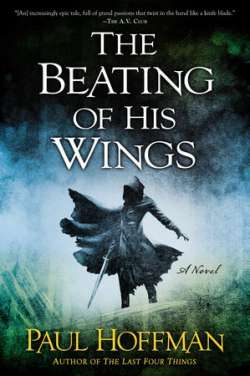
Following the bestselling novels The Left Hand of God and The Last Four Things comes the final installment of Paul Hoffman’s stark, epic trilogy. Thomas Cale has been running from the truth…. Since discovering that his brutal military training has been for one purpose—to destroy God’s greatest mistake, mankind itself—Cale has been hunted by the very man who made him into the Angel of Death: Pope Redeemer Bosco. Cale is a paradox: arrogant and innocent, generous and pitiless. Feared and revered by those who created him, he has already used his breathtaking talent for violence and destruction to bring down the most powerful civilization in the world. But Thomas Cale’s soul is dying. As his body is racked with convulsions, he knows that the final judgment will not wait. As the day of reckoning draws close, Cale’s sense of vengeance leads him back to the heart of darkness—the Sanctuary—and to confront the person he hates most in the world….
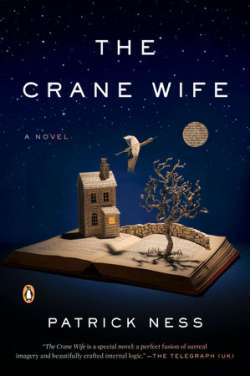
A magical novel, based on a Japanese folk tale, that imagines how the life of a broken-hearted man is transformed when he rescues an injured white crane that has landed in his backyard.George Duncan is an American living and working in London. At forty-eight, he owns a small print shop, is divorced, and lonelier than he realizes. All of the women with whom he has relationships eventually leave him for being too nice. But one night he is woken by an astonishing sound—a terrific keening, which is coming from somewhere in his garden. When he investigates he finds a great white crane, a bird taller than even himself. It has been shot through the wing with an arrow. Moved more than he can say, George struggles to take out the arrow from the bird's wing, saving its life before it flies away into the night sky.The next morning, a shaken George tries to go about his daily life, retreating to the back of his store and making cuttings from discarded books—a harmless, personal hobby—when through the front door of the shop a woman walks in. Her name is Kumiko, and she asks George to help her with her own artwork. George is dumbstruck by her beauty and her enigmatic nature, and begins to fall desperately in love with her. She seems to hold the potential to change his entire life, if he could only get her to reveal the secret of who she is and why she has brought her artwork to him.Witty, magical, and romantic, The Crane Wife is a story of passion and sacrifice, that resonates on the level of dream and myth. It is a novel that celebrates the creative imagination, and the disruptive power of love.
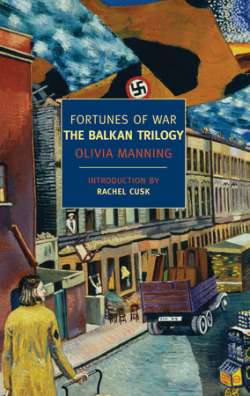
The Balkan Trilogy is the story of a marriage and of a war, a vast, teeming, and complex masterpiece in which Olivia Manning brings the uncertainty and adventure of civilian existence under political and military siege to vibrant life. Manning’s focus is not the battlefield but the café and kitchen, the bedroom and street, the fabric of the everyday world that has been irrevocably changed by war, yet remains unchanged.At the heart of the trilogy are newlyweds Guy and Harriet Pringle, who arrive in Bucharest—the so-called Paris of the East—in the fall of 1939, just weeks after the German invasion of Poland. Guy, an Englishman teaching at the university, is as wantonly gregarious as his wife is introverted, and Harriet is shocked to discover that she must share her adored husband with a wide circle of friends and acquaintances. Other surprises follow: Romania joins the Axis, and before long German soldiers overrun the capital. The Pringles flee south to Greece, part of a group of refugees made up of White Russians, journalists, con artists, and dignitaries. In Athens, however, the couple will face a new challenge of their own, as great in its way as the still-expanding theater of war.
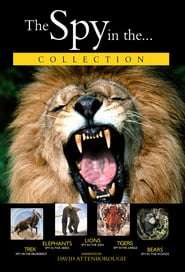
A nature documentary narrated by David Attenborough and published by BBC broadcasted as part of BBC Wildlife Specials in 2000. A motorised camera with state-of-the-art microphones disguised as a rock covered in leaves. It was invented specifically for this project of infiltrating a pride of lions to record their lives over a period of a couple of years.
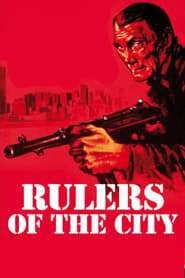
Tony, a mob loan collector, is dissatisfied with his station in life. Though he dreams of one day being rich, he is stuck with the dead-end job of beating up borrowers who fall behind in their payments. After meeting up with Napoli, another mob enforcer who's just been fired from his job, the two hatch a plan. Together, they will con mob boss Manzari out of a fortune, after which they can retire and live in luxury. Manzari, however, is not about to let them go so easily.
When Tom Cutter hires Constantine Shaklin as an engineer in his international air freight business, he little realizes the extraordinary gifts of his new recruit. Shaklin soon proves to possess a charismatic power that inspires everyone he meets to a new faith and hope for humanity. As Cutter’s business expands across the Middle East and Asia, so does Shaklin’s fame, unifying people from a wide array of cultures and religions with his unusual blend of the practical and the spiritual.

Langston Hughes's stories about Jesse B. Semple--first composed for a weekly column in the Chicago Defender and then collected in Simple Speaks His Mind, Simple Takes a Wife, and Simple Stakes a Claim--have been read and loved by hundreds of thousands of readers. In The Best of Simple, the author picked his favorites from these earlier volumes, stories that not only have proved popular but are now part of a great and growing literary tradition. Simple might be considered an Everyman for black Americans. Hughes himself wrote: "...these tales are about a great many people--although they are stories about no specific persons as such. But it is impossible to live in Harlem and not know at least a hundred Simples, fifty Joyces, twenty-five Zaritas, and several Cousin Minnies--or reasonable facsimiles thereof." As Arnold Rampersad has written, Simple is "one of the most memorable and winning characters in the annals of American literature, justly regarded as one of Hughes's most inspired creations."

A New York Times Notable Book that “casts a searing eye on the labyrinth that is the American foster care system” (NPR’s On Point). Who are the children of foster care? What, as a country, do we owe them? Cris Beam, a foster mother herself, spent five years immersed in the world of foster care looking into these questions and tracing firsthand stories. The result is To the End of June, an unforgettable portrait that takes us deep inside the lives of foster children in their search for a stable, loving family. Beam shows us the intricacies of growing up in the system—the back-and-forth with agencies, the rootless shuffling between homes, the emotionally charged tug between foster and birth parents, the terrifying push out of foster care and into adulthood. Humanizing and challenging a broken system, To the End of June offers a tribute to resiliency and hope for real change. “A triumph of narrative reporting and storytelling.” —The New York Times “[A] powerful . . . and refreshing read.” —Chicago Tribune “A sharp critique of foster-care policies and a searching exploration of the meaning of family.” —Publishers Weekly, starred review “Heart-rending and tentatively hopeful.” —Salon
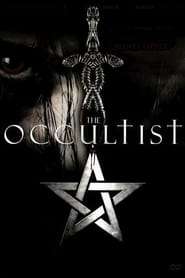
When a group of med students go to take their final exams, they find themselves subjects of a twisted and bloody Satanic ritual led by their professor. It's up to two of them to save all.