« Return to all search results
Title Search Results
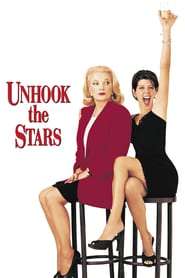
Widowed mother Mildred must suddenly redefine herself and find an outlet for her nurturing side when her adult daughter moves out of the family home. Though Mildred thinks she's found her purpose when her neighbor, overworked single mother Monica, asks her to look after her little boy, she has great difficulty learning to strike a healthy balance between giving selflessly to others and remembering to take care of herself.
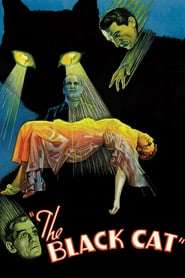
After a road accident in Hungary, the American honeymooners Joan and Peter and the enigmatic Dr. Werdegast find refuge in the house of the famed architect Hjalmar Poelzig, who shares a dark past with the doctor.
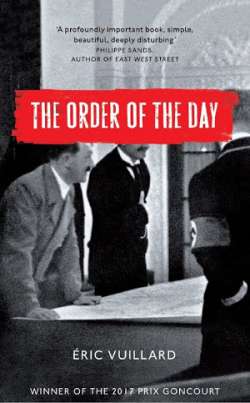
WINNER OF THE 2017 PRIX GONCOURT "A thoroughly gripping and mesmerising work of black comedy and political disaster" Guardian Éric Vuillard's gripping novel The Order of the Day tells the story of the pivotal meetings which took between the European powers in the run up to World War Two. What emerges is a fascinating and incredibly moving account of failed diplomacy, broken relationships, and the catastrophic momentum which led to conflict. The titans of German industry - set to prosper under the Nazi government - gather to lend their support to Adolf Hitler. The Australian Chancellor realizes too late that he has wandered into a trap, as Hitler delivers the ultimatum that will lay the groundwork for Germany's annexation of Austria. Winston Churchill joins Neville Chamberlain for a farewell luncheon held in honour of Joachim von Ribbentrop: German Ambassador to England, soon to be Foreign Minister in the Nazi government, and future defendant at the Nuremberg trials. We know that these meetings took place, but what was the mood in the room? What words were exchanged? What egos that were in play? Vuillard makes it impossible to ignore the fact that the world was brought to the brink of war because of the actions of, and decisions made by, those in power. The sense of failure and tragedy is cumulative: there was nothing inevitable about these disastrous events. PRAISE FOR THE ORDER OF THE DAY "[A] remarkable account...It captures the bizarre blend of wishful thinking, clownish self-importance, and cold calculation that characterized many of the Nazis' powerful enablers." The New Yorker "Gripping...a tour de force...this unusual work...peel[s] away the veils of dissimulation, disguise and self-justification that conspire to make historical disasters appear as just the way things happen." Wall Street Journal "Vuillard is expert at black humor." New York Review of Books "Extraordinary, disturbingly resonant." BBC "Don't believe for a minute that this all belongs to some distant past,' Vuillard writes, and this poetic, unconventional history compels the reader to agree." Publishers Weekly "Vuillard's writing is spare, angry and powerful...a chilling, brilliant look at the rise of fascism in the 1930s that also works as a warning for today." NPR, Best Books of the Year [A] masterpiece...[Vuillard] illuminates in glorious and ugly precision how the concentration of wealth and power, a cult of personality, political corruption, bigotry, and narcissism are the necessary but sometimes ignored steps that lead to catastrophe." Kerri Arsenault, Literary Hub, Favorite Books of the Year "[The Order of the Day] scripts the awful behind-the-scenes march, with all its corporate and foreign complicity, from 1933 to Hitler's rise to power in ways so closely observed it feels lived." Boston Globe, Best Books of the Year
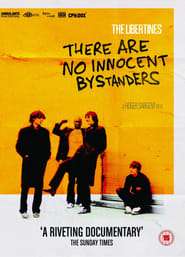
An access-all-areas documentary about The Libertines reunion shows at Reading & Leeds Festivals 2010 from first time director Roger Sargent; photographer, witness and confidante of the band throughout their short and turmoil filled career. Featuring the present day story of the build up, rehearsals, warm-ups and concerts set against the painfully honest interviews with each band member recounting the band's history and illustrated by Sargent's unparalleled archive of classic Libertines photographs. An intense and intimate portrayal of arguably Britain's most exciting and influential band of the last decade.
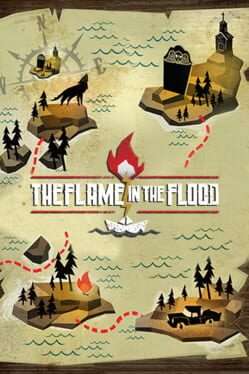
A rogue-lite river journey through the backwaters of a forgotten post-societal America. Forage, craft, evade predators. Travel by foot and by raft down a procedurally-generated river as you scrounge for resources, craft tools, remedy afflictions, evade the vicious wildlife, and most importantly, stay ahead of the coming rains.
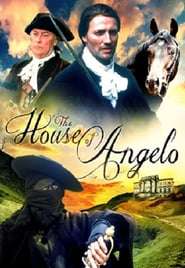
It's 1775 and the American Revolution. Britain is vulnerable and France knows it. The difference between war and peace is an affluent, young French-American, Count Octavius, who has estates in America which the French Crown is desperate to possess. Without the protection of the Master of Arms, Dominic Angelo, Ocatvius' family could be murdered. But when Angelo, an expert in the art of deception, is tricked by a traitor in his own ranks, the stakes get even higher.
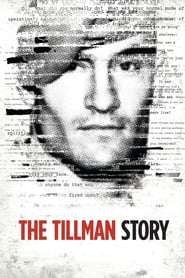
Pat Tillman never thought of himself as a hero. His choice to leave a multimillion-dollar football contract and join the military wasn't done for any reason other than he felt it was the right thing to do. The fact that the military manipulated his tragic death in the line of duty into a propaganda tool is unfathomable and thoroughly explored in Amir Bar-Lev's riveting and enraging documentary.
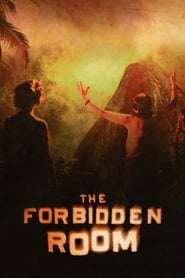
A submarine crew, a feared pack of forest bandits, a famous surgeon, and a battalion of child soldiers all get more than they bargained for as they wend their way toward progressive ideas on life and love.
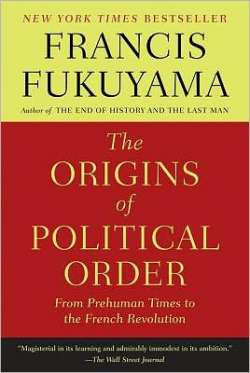
A New York Times Notable Book for 2011 A Globe and Mail Best Books of the Year 2011 Title A Kirkus Reviews Best Nonfiction of 2011 title Virtually all human societies were once organized tribally, yet over time most developed new political institutions which included a central state that could keep the peace and uniform laws that applied to all citizens. Some went on to create governments that were accountable to their constituents. We take these institutions for granted, but they are absent or are unable to perform in many of today's developing countries—with often disastrous consequences for the rest of the world. Francis Fukuyama, author of the bestselling The End of History and the Last Man and one of our most important political thinkers, provides a sweeping account of how today's basic political institutions developed. The first of a major two-volume work, The Origins of Political Order begins with politics among our primate ancestors and follows the story through the emergence of tribal societies, the growth of the first modern state in China, the beginning of the rule of law in India and the Middle East, and the development of political accountability in Europe up until the eve of the French Revolution. Drawing on a vast body of knowledge—history, evolutionary biology, archaeology, and economics—Fukuyama has produced a brilliant, provocative work that offers fresh insights on the origins of democratic societies and raises essential questions about the nature of politics and its discontents.
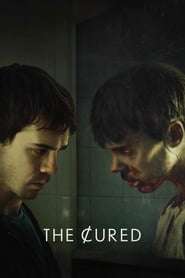
What happens when the undead return to life? In a world ravaged for years by a virus that turns the infected into zombie-like cannibals, a cure is at last found and the wrenching process of reintegrating the survivors back into society begins.