« Return to all search results
Title Search Results
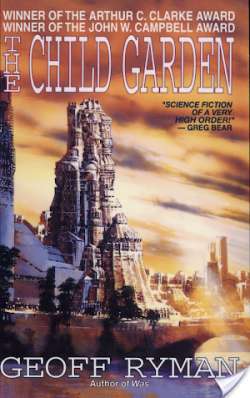
The multiple-award-winning sf classic from the acclaimed author of Was. In the city of the future, humans photosynthesize, viruses educate people, organics have replaced electronics . . . and almost no one lives past 40. The outcast Milena feels alone--until she meets the genetically engineered Rolfa.
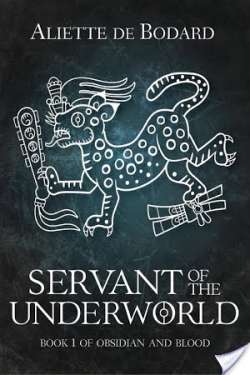
The first book in the critically acclaimed Obsidian and Blood trilogy: Year One-Knife, Tenochtitlan the capital of the Aztecs. Human sacrifice and the magic of the living blood are the only things keeping the sun in the sky and the earth fertile. A Priestess disappears from an empty room drenched in blood. It should be a usual investigation for Acatl, High Priest of the Dead--except that his estranged brother is involved, and the the more he digs, the deeper he is drawn into the political and magical intrigues of noblemen, soldiers, and priests-and of the gods themselves... REVIEWS: ‘ gripping mystery steeped in blood and ancient Aztec magic. I was enthralled.’ — Sean Williams ‘An Aztec priest of the dead tries to solve a murder mystery, and finds that politics may be even more powerful than magic. A vivid portrayal of an interesting culture in a truly fresh fantasy novel.’ — Kevin J. Anderson ‘Amid the mud and maize of the Mexica empire, Aliette de Bodard has composed a riveting story of murder, magic and sibling rivalry.’ — Elizabeth Bear ‘The world-building is exquisite and we *believe* we are transported to the 15th century Tenotichtlan and together with the superb voice they formed the main reason I enjoyed this book so much... Highly recommended... Ms. de Bodard is a writer to watch.’ — Fantasy Book Critic
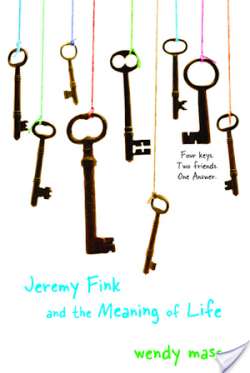
In one month Jeremy Fink will turn thirteen. But does he have what it takes to be a teenager? He collects mutant candy, he won't venture more than four blocks from his apartment if he can help it, and he definitely doesn't like surprises. On the other hand, his best friend, Lizzy, isn't afraid of anything, even if that might get her into trouble now and then. Jeremy's summer takes an unexpected turn when a mysterious wooden box arrives in the mail. According to the writing on the box, it holds the meaning of life! Jeremy is supposed to open it on his thirteenth birthday. The problem is, the keys are missing, and the box is made so that only the keys will open it without destroying what's inside. Jeremy and Lizzy set off to find the keys, but when one of their efforts goes very wrong, Jeremy starts to lose hope that he'll ever be able to open the box. But he soon discovers that when you're meeting people named Oswald Oswald and using a private limo to deliver unusual objects to strangers all over the city, there might be other ways of finding out the meaning of life. Lively characters, surprising twists, and thought-provoking ideas make Wendy Mass's latest novel an unforgettable read.
Jenny, a young doctor who feels guilty after a young woman she refused to see winds up dead a few days later, decides to find out who the girl was, after the police can't identify the young woman.
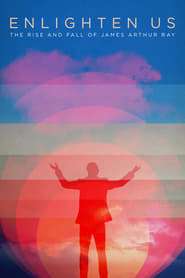
The self-help industry is worth $11 billion dollars a year. It's an industry that captivates those seeking happiness, release from suffering and those longing for a path and a leader to follow. James Arthur Ray for many who followed him was that leader to guide his flock. But as the story unfolds, as told by Ray himself and also by his followers, we learn that that path was fraught with danger and perhaps even greater suffering. Through honest and candid interviews, interwoven with court footage and news archive, Enlighten Us asks the important questions.
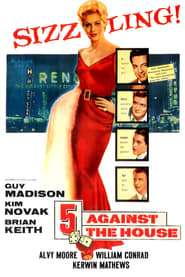
Former war-time Army buddies now students in college decide to rip off a Reno casino.
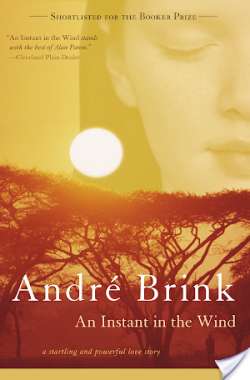
The year is 1749, when the Boers ruled South Africa. And so it has come to his Baas's final command to his Hottentot slave Adam, to flog his mother, because she refuses to prune the master's vineyard in order to attend her own beloved mother's funeral. And when he refuses to do so, and his Baas smashes his face with a piece of wood, Adam turns on him, and beats him almost to death. Then he flees to South Africa's veld. There he comes to the rescue of Elizabeth, a white woman, and the only person to survive her husband's expedition in the vast South African interior. Alone and terrified, she pleads with the runaway slave to bring her back to the Cape and her home. Adam agrees because he believes by rescuing Elizabeth, he will be awarded his own freedom. This, then is the stunning story of their trek together, how they find in each other their mutual need and humanity, and finally how their days together turn into an unforgettable, tender love story. Shortlisted for the 1976 Booker Prize
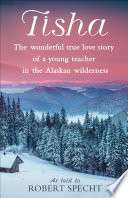
The beloved real-life story of a woman in the Alaskan wilderness, the children she taught, and the man she loved “From the time I’d been a girl, I’d been thrilled with the idea of living on a frontier. So when I was offered the job of teaching school in a gold-mining settlement called Chicken, I accepted right away.” Anne Hobbs was only nineteen in 1927 when she came to harsh and beautiful Alaska. Running a ramshackle schoolhouse would expose her to more than just the elements. After she allowed Native American children into her class and fell in love with a half-Inuit man, she would learn the meanings of prejudice and perseverance, irrational hatred and unconditional love. “People get as mean as the weather,” she discovered, but they were also capable of great good. As told to Robert Specht, Anne Hobbs’s true story has captivated generations of readers. Now this beautiful new edition is available to inspire many more. “The memoir reads like an old-fashioned novel, a heartwarming love story with the added interest of frontier hardships and vividly portrayed characters.”—Publishers Weekly
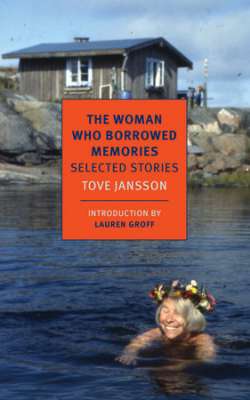
An NYRB Classics Original Tove Jansson was a master of brevity, unfolding worlds at a touch. Her art flourished in small settings, as can be seen in her bestselling novel The Summer Book and in her internationally celebrated cartoon strips and books about the Moomins. It is only natural, then, that throughout her life she turned again and again to the short story. The Woman Who Borrowed Memories is the first extensive selection of Jansson’s stories to appear in English. Many of the stories collected here are pure Jansson, touching on island solitude and the dangerous pull of the artistic impulse: in “The Squirrel” the equanimity of the only inhabitant of a remote island is thrown by a visitor, in “The Summer Child” an unlovable boy is marooned along with his lively host family, in “The Cartoonist” an artist takes over a comic strip that has run for decades, and in “The Doll’s House” a man’s hobby threatens to overwhelm his life. Others explore unexpected territory: “Shopping” has a post-apocalyptic setting, “The Locomotive” centers on a railway-obsessed loner with murderous fantasies, and “The Woman Who Borrowed Memories” presents a case of disturbing transference. Unsentimental, yet always humane, Jansson’s stories complement and enlarge our understanding of a singular figure in world literature.