« Return to all search results
Title Search Results
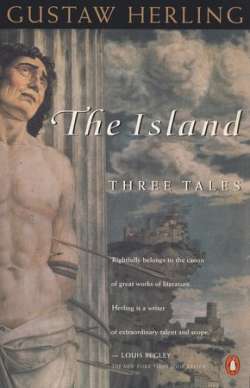
One of the New York Times Books Review's Best Books of 1993"A writer of stylistic mastery and moral depth, who deserves to be placed among the best in any language." -Jaroslaw Anders, The Boston Sunday GlobeBest known for the unforgettable account of his experiences in a Russian slave-labor camp, A World Apart, Gustaw Herling was regarded by many as one of Poland's greatest prose writers of the 20th century. These three tales, all set in Italy, are intensely dramatic depictions of suffering, solitude, and mindless violence done to the spirit. The author's command of language is matched by an unblinking observation of his characters' stumbling progress toward salvation and a compassion that is limitless but never sentimental."Reading The Island . . . I felt an exhilaration that was like the exhilaration of that first moment of being touched and in some way shattered by great prose." - Edna O'Brien
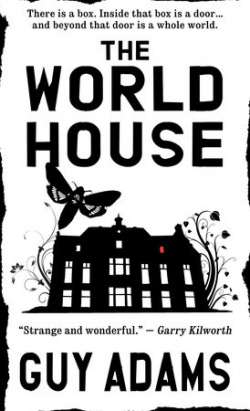
Combining the puzzle box of Hellraiser with the explorartion of Tad Williams' Otherland series, this is the perfect blend of fantasy and adventure, an exceptional modern fantasy debut.THERE IS A BOX. INSIDE THAT BOX IS A DOOR. AND BEYOND THAT DOOR IS A WHOLE WORLD. In some rooms, forests grow. In others, animals and objects come to life. Elsewhere, secrets and treasures wait for the brave and foolhardy.And at the very top of the house, a prisoner sits behind a locked door waiting for a key to turn. The day that happens, the world will end...File under: Modern Fantasy [Worlds within Worlds | Prison Break | Exploring the Unknown | Dark Powers]
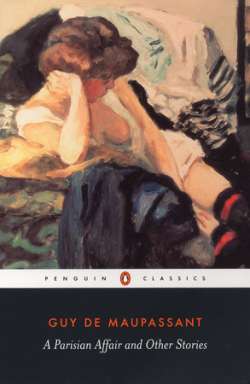
Set in the Paris of society women, prostitutes and small-minded bourgeousie, and the isolated villages of rural Normandy that de Maupassant knew as a child, the thirty-three tales in this volume are among the most darkly humorous and brilliant short stories in nineteenth-century literature. They focus on the relationships between men and women, as in the poignant fantasy of 'A Parisian Affair', between brothers and sisters, and between masters and servants. Through these relationships, Maupassant explores the dualistic nature of the human character and his stories reveal both nobility, civility and generosity, and, in stories such as 'At Sea' and 'Boule de Suif', vanity, greed and hypocrisy. Maupassant's stories repeatedly lay humanity bare with deft wit and devastating honesty.Siân Miles's vibrant new translation is accompanied by an Introduction discussing Maupassant's stpries as a reflection of the rapidly changing beliefs of his society. This edition includes the famous story, "The Necklace," as well as a chronology, notes, and suggestions for further reading.For more than seventy years, Penguin has been the leading publisher of classic literature in the English-speaking world. With more than 1,700 titles, Penguin Classics represents a global bookshelf of the best works throughout history and across genres and disciplines. Readers trust the series to provide authoritative texts enhanced by introductions and notes by distinguished scholars and contemporary authors, as well as up-to-date translations by award-winning translators.
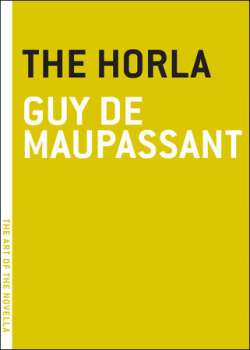
Our woe is upon us.This chilling tale of one man’s descent into madness was published shortly before the author was institutionalized for insanity, and so The Horla has inevitably been seen as informed by Guy de Maupassant’s mental illness. While such speculation is murky, it is clear that de Maupassant—hailed alongside Chekhov as father of the short story—was at the peak of his powers in this innovative precursor of first-person psychological fiction. Indeed, he worked for years on The Horla’s themes and form, first drafting it as “Letter from a Madman,” then telling it from a doctor’s point of view, before finally releasing the terrified protagonist to speak for himself in its devastating final version. In a brilliant new translation, all three versions appear here as a single volume for the first time. The Art of The Novella Series Too short to be a novel, too long to be a short story, the novella is generally unrecognized by academics and publishers. Nonetheless, it is a form beloved and practiced by literature's greatest writers. In the Art Of The Novella series, Melville House celebrates this renegade art form and its practitioners with titles that are, in many instances, presented in book form for the first time.
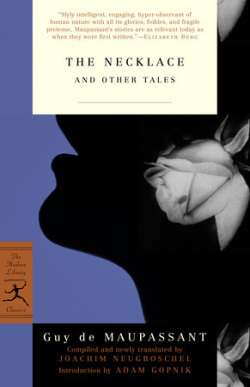
Ranging from poignant scrutiny of social pretension, to wicked tales of lust and love, to harrowing stories of terror and madness, the genius of Guy de Maupassant, France’s greatest short-story writer, is on full display in this enthralling new translation by Joachim Neugroschel. The stories Neugroschel has gathered vividly reveal Maupassant’s remarkable range, his keen eye, his technical perfection, his sexual realism, his ability to create whole worlds and sum up intricate universes of feeling in a few pages. Adam Gopnik’s Introduction incisively explores the essence of Maupassant’s unique style and his tremendous, if unjustly unacknowledged, influence (on everything from the American short story to contemporary cinema), bearing eloquent testimony to Maupassant’s continuing and vital appeal.From the Hardcover edition.
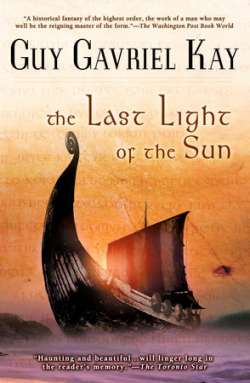
Guy Gavriel Kay's bestselling and most acclaimed novel yet is a powerful epic that evokes the Celtic, Anglo-Saxon, and Norse cultures of a thousand years ago. There is nothing soft or silken about the North. The lives of its men and women are as challenging as the climate and lands in which they dwell. For generations, the Erlings of Vinmark have taken their dragon-prowed ships across the seas, raiding the lands of the Anglcyn and Cyngael peoples, leaving fire and death behind. But times change, and in a tale woven with consummate artistry, people of all three cultures find the threads of their lives unexpectedly entwined. Erling Bern Thorkellson, punished for his father's sins, commits an act of vengeance and desperation that brings him face-to-face, across the sea, with a past he's been trying to leave behind. In the Anglcyn lands of King Aeldred, the shrewd ruler, battling inner demons all the while, shores up his defenses with alliances and diplomacy—and with swords and arrows—while his exceptional, unpredictable sons and daughters pursue their own desires when battle comes and darkness falls in the woods. And in the valleys and shrouded hills of the Cyngael, whose voices carry music even as they feud and raid amongst each other, violence and love become deeply interwoven when the dragon ships come, and Alun ab Owyn, chasing an enemy in the night, glimpses strange lights gleaming above forest pools. Making brilliant use of saga, song, and chronicle, Kay brings to life an unforgettable world balanced on the knife-edge of change.
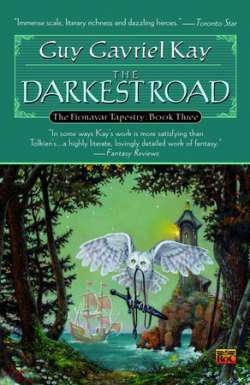
In the conclusion of Guy Gavriel Kay’s critically acclaimed fantasy trilogy, The Fionavar Tapestry, five university students from our world prepare to sacrifice themselves—as they enter into final battle against a power of unimaginable proportions. . . . “Immense scale, literary richness and dazzling heroes.”—Toronto Sun “In some ways Kay’s work is more satisfying than Tolkein’s. . . . A highly literate, detailed work of fantasy.”—Fantasy Reviews “Certainly this is one of the very best of the fantasies which have appeared since Tolkien, and I trust it will be recognized as such.”—Andre Norton “Kay’s intricate Celtic background will please fantasy buffs . . . in the manner of The Silmarillion, the posthumous Tolkien work that Kay helped edit.”—Publishers Weekly
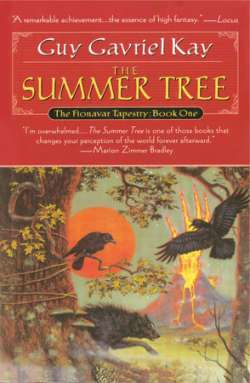
Unabridged ? 13 hours The Summer Tree is the first novel of Guy Gavriel Kay's critically acclaimed fantasy trilogy, The Fionavar Tapestry. Five university students embark on a journey of self-discovery when they enter a realm of wizards and warriors, gods and mythical creatures-and good and evil...
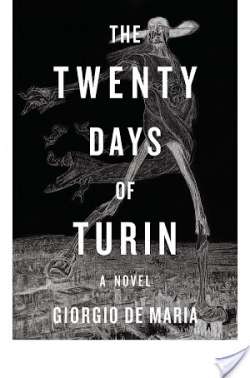
Named one of NPR's Best Books of 2017 Written during the height of the 1970s Italian domestic terror, a cult novel, with distinct echoes of Lovecraft and Borges, makes its English-language debut. In the spare wing of a church-run sanatorium, some zealous youths create "the Library," a space where lonely citizens can read one another’s personal diaries and connect with like-minded souls in "dialogues across the ether." But when their scribblings devolve into the ugliest confessions of the macabre, the Library’s users learn too late that a malicious force has consumed their privacy and their sanity. As the city of Turin suffers a twenty-day "phenomenon of collective psychosis" culminating in nightly massacres that hundreds of witnesses cannot explain, the Library is shut down and erased from history. That is, until a lonely salaryman decides to investigate these mysterious events, which the citizenry of Turin fear to mention. Inevitably drawn into the city’s occult netherworld, he unearths the stuff of modern nightmares: what’s shared can never be unshared. An allegory inspired by the grisly neo-fascist campaigns of its day, The Twenty Days of Turin has enjoyed a fervent cult following in Italy for forty years. Now, in a fretful new age of "lone-wolf" terrorism fueled by social media, we can find uncanny resonances in Giorgio De Maria’s vision of mass fear: a mute, palpitating dread that seeps into every moment of daily existence. With its stunning anticipation of the Internet—and the apocalyptic repercussions of oversharing—this bleak, prescient story is more disturbingly pertinent than ever. Brilliantly translated into English for the first time by Ramon Glazov, The Twenty Days of Turin establishes De Maria’s place among the literary ranks of Italo Calvino and beside classic horror masters such as Edgar Allan Poe and H. P. Lovecraft. Hauntingly imaginative, with visceral prose that chills to the marrow, the novel is an eerily clairvoyant magnum opus, long overdue but ever timely.
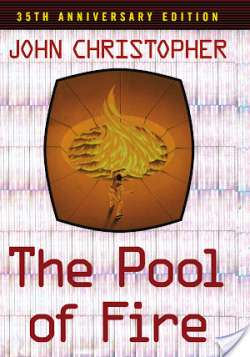
Will and a small group of free people plan to destroy the three great cities of the Tripods before the arrival of a space ship destined to doom humanity.