« Return to all search results
Title Search Results
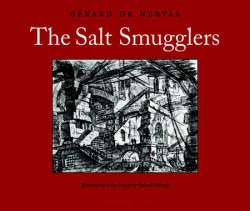
First published as a feuilleton in a left-wing newspaper in 1850, The Salt Smugglers provides a political satire of the waning days of France’s short-lived Second Republic. With nods to Diderot and Sterne, this shaggy-dog story deals less with contraband salt smugglers than with the subversive power of fiction to transgress legal and esthetic boundaries. By writing what he claimed was a purely documentary account of his picaresque adventures in search of an elusive book recording the true history of a certain seventeenth-century swashbuckler, Nerval sought to deride the press censors of the day who forbade the serial publication of novels in newspapers – and in the process he provocatively deconstructed existing distinctions between fact and fiction. Never before translated into English and still unavailable as a separately published volume in French, The Salt Smugglers is a pre-postmodern gem of experimental prose. Richard Sieburth’s vibrant translation and illuminating afterword remind us why Gérard de Nerval’s blend of sly irony and acerbic social criticism proved so inspiring to authors as various as Baudelaire, Proust, and Leiris.
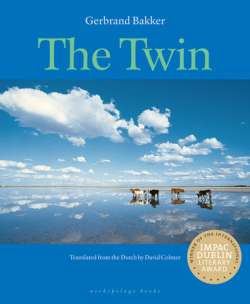
When his twin brother is killed in a car accident, Helmer is obliged to give up university to take over his brother’s role on the small family farm, resigning himself to spending the rest of his days "with his head under a cow." The novel begins thirty years later with Helmer moving his invalid father upstairs out of the way, so that he can redecorate the downstairs, finally making it his own. Then Riet, the woman who had once been engaged to marry Helmer’s twin, appears and asks if her troubled eighteen-year-old son could come live on the farm for a while. Ostensibly a novel about the countryside, The Twin ultimately poses difficult questions about solitude and the possibility of taking life into one’s own hands. It chronicles a way of life that has resisted modernity, a world culturally apart yet laden with familiar longing.
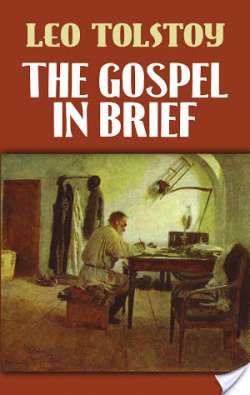
The Russian author reinterprets the gospels, disregarding issues related to Jesus' divinity and focusing strictly on his words and teachings. The result is a remarkably modern meditation on spirituality.
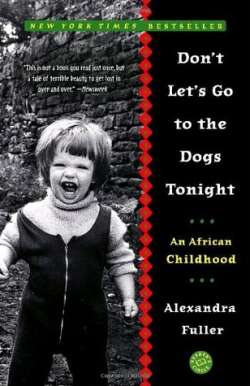
NEW YORK TIMES BESTSELLER • A worthy heir to Isak Dinesen and Beryl Markham, Alexandra Fuller shares visceral memories of her childhood in Africa, and of her headstrong, unforgettable mother. “This is not a book you read just once, but a tale of terrible beauty to get lost in over and over.”—Newsweek “By turns mischievous and openhearted, earthy and soaring . . . hair-raising, horrific, and thrilling.”—The New Yorker Though it is a diary of an unruly life in an often inhospitable place, Don’t Let’s Go to the Dogs Tonight is suffused with Fuller’s endearing ability to find laughter, even when there is little to celebrate. Fuller’s debut is unsentimental and unflinching but always captivating. In wry and sometimes hilarious prose, she stares down disaster and looks back with rage and love at the life of an extraordinary family in an extraordinary time. From 1972 to 1990, Alexandra Fuller—known to friends and family as Bobo—grew up on several farms in southern and central Africa. Her father joined up on the side of the white government in the Rhodesian civil war, and was often away fighting against the powerful black guerilla factions. Her mother, in turn, flung herself at their African life and its rugged farm work with the same passion and maniacal energy she brought to everything else. Though she loved her children, she was no hand-holder and had little tolerance for neediness. She nurtured her daughters in other ways: She taught them, by example, to be resilient and self-sufficient, to have strong wills and strong opinions, and to embrace life wholeheartedly, despite and because of difficult circumstances. And she instilled in Bobo, particularly, a love of reading and of storytelling that proved to be her salvation. Alexandra Fuller writes poignantly about a girl becoming a woman and a writer against a backdrop of unrest, not just in her country but in her home. But Don’t Let’s Go to the Dogs Tonight is more than a survivor’s story. It is the story of one woman’s unbreakable bond with a continent and the people who inhabit it, a portrait lovingly realized and deeply felt. Praise for Don’t Let’s Go to the Dogs Tonight “Riveting . . . [full of] humor and compassion.”—O: The Oprah Magazine “The incredible story of an incredible childhood.”—The Providence Journal
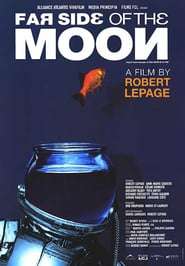
After the death of his mother, a man tries to discover a meaning to his life, to the universe and to rebuild a relationship with the only family he has left: his brother.
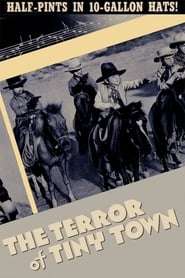
Using a conventional Western story with an all dwarf cast, the filmmakers were able to showcase gags such as cowboys entering the local saloon by walking under the swinging doors, and pint-sized cowboys galloping around on Shetland ponies while roping calves.
Greg Powell, a disturbed ex-con, recruits Jimmy Youngblood (Smith) a petty thief, as partner in crime. Powell panics when they two of are pulled over by two cops for tail lights. Powell decides to kidnap the cops and Smith goes along with his crazy scheme. They drive out to a deserted onion field in Bakersfield, where one cop is killed and the other escapes. The film explores the consequences.
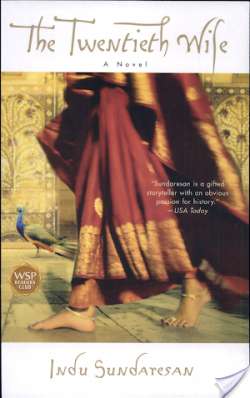
The story of Mehrunnisa, the daughter of servents who became the an empresses of the Mughal empire.
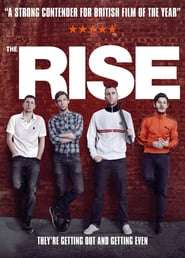
A young man recently released from prison recruits his three best friends to rob the local drug kingpin who is responsible for his incarceration.
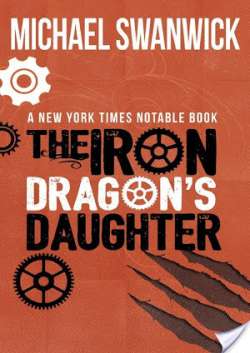
A New York Times Notable Book: “Examines the industrial revolution, the Vietnam War, racism and sexism, and the escapist dreams of genre fantasy. A truly great anti-fantasy.” —China Miéville Jane is trapped as a changeling in an industrialized Faerie ruled by aristocratic high elves and populated by ogres, dwarves, night-gaunts, and hags. She is the only human in a factory where underage forced labor builds cybernetic, magical dragons that are weaponized and sent off to war. When the damaged dragon Melanchthon tempts Jane with promises of freedom, the stage is set for a daring escape that will shake the foundations of existence. Combining alchemy and technology, a coming-of-age story like no other, The Iron Dragon’s Daughter takes place against a dystopic mindscape of dark challenges and class struggles that force Jane to make costly decisions at every turn. A finalist for the Arthur C. Clarke Award, the World Fantasy Award for Best Novel, and the 1994 Locus Award, The Iron Dragon’s Daughter a is one-of-a-kind melding of grimdark fantasy and cyberpunk grit from the Nebula Award–winning author of Stations of the Tide. It engages the reader in a nihilistic world in which nothing is as it seems and everything comes at a steep and often horrific price.