« Return to all search results
Title Search Results
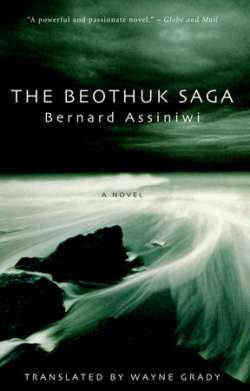
This astounding novel fully deserves to be called a saga. It begins a thousand years ago in the time of the Vikings in Newfoundland. It is crammed with incidents of war and peace, with fights to the death and long nights of lovemaking, and with accounts of the rise of local clan chiefs and the silent fall of great distant empires. Out of the mists of the past it sweeps forward eight hundred years, to the lonely death of the last of the Beothuk.The Beothuk, of course, were the original native people of Newfoundland, and thus the first North American natives encountered by European sailors. Noticing the red ochre they used as protection against mosquitoes, the sailors called them “Red-skins,” a name that was to affect an entire continent. As a people, they never were to be understood. Even The Canadian Encyclopedia admits: “Very little is known about Beothuk society and even less about Beothuk history.”Until now. By adding his novelist’s imagination to his knowledge as an anthropologist and a historian, Bernard Assiniwi has written a convincing account of the Beothuk people through the ages. To do so he has given us a mirror image of the history rendered by Europeans. For example, we know from the Norse Sagas that four slaves escaped from the Viking settlement at L’Anse aux Meadows. What happened to them? Bernard Assiniwi supplies a plausible answer, just as he perhaps solves the mystery of the Portuguese ships that sailed west in 1501 to catch more Beothuk, and disappeared from the paper records forever.The story of the Beothuk people is told in three parts. “The Initiate” tells of Anin, who made a voyage by canoe around the entire island a thousand years ago, encountering the strange Vikings with their “cutting sticks” and their hair “the colour of dried grass.” His encounters with whales, bears, raiding Inuit and other dangers, and his survival skills on this epic journey make for fascinating reading, as does his eventual return to his home where, with the help of his strong and active wives, he becomes a legendary chief, the father of his people.“The Invaders” takes us to the time when Basque, Breton, Spanish, Portuguese, French and English fishermen and explorers thronged the waters off Newfoundland. All too often they raided, kidnapped or slaughtered the natives, who – unable to communicate in words – learned to fight back in guerrilla attacks. We learn the names of the men and women who led this heroic unequal struggle, brilliantly imagined here as it must have been.The final section is able to stick very closely to recorded fact; it is entitled “Genocide.” We learn of the state of the Beothuk nation by the late 1700s, hunted down to a man, a woman, and a child) with a bounty on their heads. Here the heartbreaking story is told by Demasduit (named “Mary March” because she was captured in March) and finally by Shanawdithit, the last Living Memory of the Beothuk, who died in St. John’s on June 5, 1829.To emphasize the authenticity of this important book – its voice filling one of the silences of history – it concludes with a Chronology of Events in Beothuk History, and a Lexicon of the Beothuk language. These are unusual additions for a novel. Yet this unforgettable book is something much more than a work of fiction; it is an imaginative reconstruction of a history that has been destroyed. Whether you are a Bouguishamesh or an Addizabad-Zéa, you will remember this book.
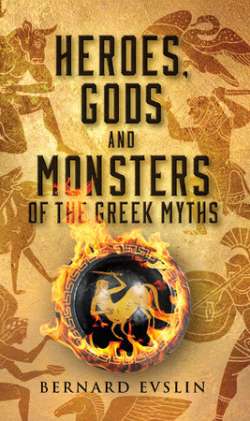
For fans of D'Aulaires' Book of Greek Myths and readers who enjoyed Homer's The Iliad and The Odyssey comes a collection by a master storyteller that evokes the golden age of mythical Greece. The earth breeds giants and ogres of indescribable horror--the heavens hold omnipotent gods and goddesses, abounding in courage, strength and wisdom. Zeus, the almighty king of the gods, who cannot resist feminine beauty -- mortal or divine, and his jealous and vengeful wife, Hera. Perseus, fearless mortal warrior, who takes on an impossible challenge: slaying the monstrous Medusa, whose glance turns men to stone. The Minotaur, half-man and half-bull, the horrible fruit of a queen's unspeakable desire, who annually destroys the young victims sacrificed to his terrifying power. A fantastic world of spells and curses, magic and mystery, forces that create and destroy at will.
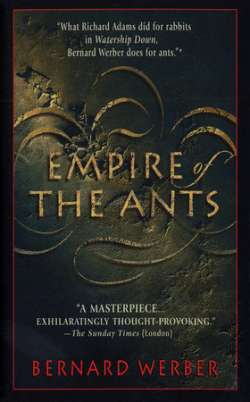
Here is the stunning international bestseller in the tradition of Watership Down but with a dark, original twist. Unique, daring, and unforgettable, it tells the story of an ordinary family who accidentally threaten the security of a hidden civilization as intelligent as our own--a colony of ants determined to survive at any cost....Jonathan Wells and his young family have come to the Paris flat at 3, rue des Sybarites through the bequest of his eccentric late uncle Edmond. Inheriting the dusty apartment, the Wells family are left with only one warning: Never go down into the cellar.But when the family dog disappears down the basement steps, Jonathan follows--and soon his wife, his son, and various would-be rescuers vanish into its mysterious depths.Meanwhile, in a pine stump in a nearby park, a vast civilization is in turmoil. Here a young female from the russet ant nation of Bel-o-kan learns that a strange new weapon has been killing off her comrades. To find out why, she enlists the help of a warrior ant, and the two set off on separate journeys into a harsh and violent world. It is a world where death takes many forms--savage birds and voracious lizards, warlike dwarf ants and rapacious termites, poisonous beetles and, most bizarre of all, the swift, murderous, giant guardians of the edge of the world: cars.Yet the end of the female's desperate quest will be the eerie secret in the cellar at 3, rue des Sybarites--a mystery she must solve in order to fulfill her special destiny as the new queen of her own great empire. But to do so she must first make unthinkable communion with the most barbaric creatures of all. Empire of the Ants is a brilliant evocation of a hidden civilization as complex as our own and far more ancient. It is a fascinating realm where boats are built of leaves and greenflies are domesticated and milked like cows, where citizens lock antennae in "absolute communication" and fight wars with precisely coordinated armies using sprays of glue and acids that can dissolve a snail. Not since Watership Down has a novel so vividly captured the lives and struggles of a fellow species and the valuable lessons they have to teach us.From the Hardcover edition.
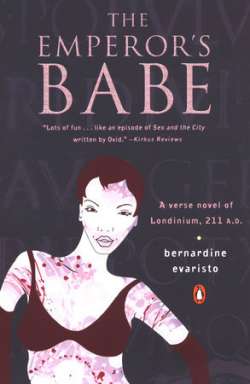
“Lots of fun . . . like an episode of Sex and the City written by Ovid.”—Kirkus Reviews Bernardine Evaristo’s tale of forbidden love in bustling third-century London is an intoxicating cocktail of poetry, history, and fiction. Feisty, precocious Zuleika, a restless teenage bride of a rich Roman businessman, craves passion and excitement. She wanders through his villa, bored, or sneaks out to see her old friends, seeking an outlet for her creativity. Then she begins an affair with the emperor, Septimus Severus, remembered to history as the “African Emperor,” and she knows her life will never be the same. Streetwise, seductive, and lyrical, The Emperor’s Babe is a “glittering fiction” with a “heroine of ancient times for the modern age” (The Times). “The adventures of a sassy, sexy girl about town . . . Funny, engaging, and a daring evocation of the possible genesis of black British history.”—The Independent on Sunday “Smart, imaginative, and readable . . . A rich farrago of historical fact and outrageous fancy.”—The New York Times Book Review “Zuleika leads us on a riotous, racy whirl through Roman Londinium—while displaying her lyric gift throughout, and at last her heartbreak to the core, and her own embrace of doom. . . . a captivating tale in verse.”—Robert Fagles

Old friends and lovers reunite for a weekend in a secluded country home after spending decades apart. They excavate old memories and pass clandestine judgments on the wildly divergent paths they’ve taken since their youth. But this isn’t just any reunion, and their conversations about the old days aren’t your typical reminiscences: After twenty-four years, Jörg, a convicted murderer and terrorist, has been released from prison. The announcement of his pardon will send shock waves through the country, but before the announcement, his friends—some of whom were Baader-Meinhof sympathizers or those who clung to them—gather for his first weekend of freedom. They have been summoned by Jörg’s devoted sister, Christiane, whose concern for her brother’s safety is matched only by the unrelenting zeal of Marko, a young man intent on having Jörg continue to fight for the cause. Bernhard Schlink is at his finest as The Weekend unfolds. Passions are pitted against pragmatism, ideas against actions, and hopes against heartbreaking realities.From the Hardcover edition.
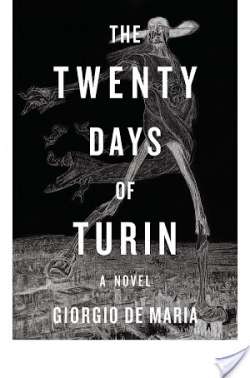
Named one of NPR's Best Books of 2017 Written during the height of the 1970s Italian domestic terror, a cult novel, with distinct echoes of Lovecraft and Borges, makes its English-language debut. In the spare wing of a church-run sanatorium, some zealous youths create "the Library," a space where lonely citizens can read one another’s personal diaries and connect with like-minded souls in "dialogues across the ether." But when their scribblings devolve into the ugliest confessions of the macabre, the Library’s users learn too late that a malicious force has consumed their privacy and their sanity. As the city of Turin suffers a twenty-day "phenomenon of collective psychosis" culminating in nightly massacres that hundreds of witnesses cannot explain, the Library is shut down and erased from history. That is, until a lonely salaryman decides to investigate these mysterious events, which the citizenry of Turin fear to mention. Inevitably drawn into the city’s occult netherworld, he unearths the stuff of modern nightmares: what’s shared can never be unshared. An allegory inspired by the grisly neo-fascist campaigns of its day, The Twenty Days of Turin has enjoyed a fervent cult following in Italy for forty years. Now, in a fretful new age of "lone-wolf" terrorism fueled by social media, we can find uncanny resonances in Giorgio De Maria’s vision of mass fear: a mute, palpitating dread that seeps into every moment of daily existence. With its stunning anticipation of the Internet—and the apocalyptic repercussions of oversharing—this bleak, prescient story is more disturbingly pertinent than ever. Brilliantly translated into English for the first time by Ramon Glazov, The Twenty Days of Turin establishes De Maria’s place among the literary ranks of Italo Calvino and beside classic horror masters such as Edgar Allan Poe and H. P. Lovecraft. Hauntingly imaginative, with visceral prose that chills to the marrow, the novel is an eerily clairvoyant magnum opus, long overdue but ever timely.
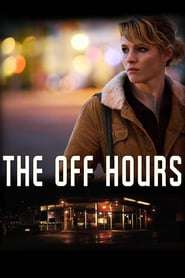
You're awake when everyone else is asleep. You're standing still as traffic is whipping by at 70mph. You see dusk and dawn everyday because they happen on your way to a time clock and then to a bed. Your off hours are spent trying to figure out why you're here, whether you want to stay, and how to leave.

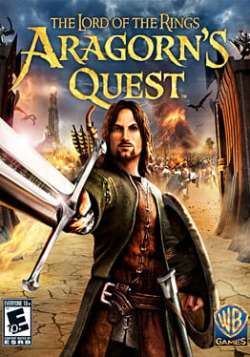
Samwise Gamgee recounts Aragorn's role in the War of the Ring to his children.
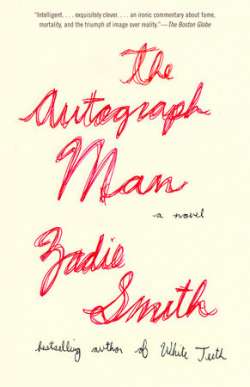
Alex-Li Tandem sells autographs. His business is to hunt for names on paper, collect them, sell them, and occasionally fake them—all to give the people what they want: a little piece of Fame. But what does Alex want? Only the return of his father, the end of religion, something for his headache, three different girls, infinite grace, and the rare autograph of forties movie actress Kitty Alexander. With fries. The Autograph Man is a deeply funny existential tour around the hollow trappings of modernity: celebrity, cinema, and the ugly triumph of symbol over experience. It offers further proof that Zadie Smith is one of the most staggeringly talented writers of her generation. Look for her new book Swing Time, coming November 2016. From the Trade Paperback edition.