« Return to all search results
Title Search Results

When gladiator Atretes locates his missing son, his plans to return to Germania are upset by Rizpah, the young widow who adopted his abandoned baby and who will fight to keep the child she loves.

Growing up in the slums of East End London, Charlie Trumper dreams of someday running his grandfather's fruit and vegetable barrow. That day comes suddenly when his grandfather dies leaving him the floundering business. With the help of Becky Salmon, an enterprising young woman, Charlie sets out to make a name for himself as "The Honest Trader". But the brutal onset of World War I takes Charlie far from home and into the path of a dangerous enemy whose legacy of evil follows Charlie and his family for generations. Encompassing three continents and spanning over sixty years, As the Crow Flies brings to life a magnificent tale of one man's rise from rags to riches set against the backdrop of a changing century.

Ask the Dust is a virtuoso performance by an influential master of the twentieth-century American novel. It is the story of Arturo Bandini, a young writer in 1930s Los Angeles who falls hard for the elusive, mocking, unstable Camilla Lopez, a Mexican waitress. Struggling to survive, he perseveres until, at last, his first novel is published. But the bright light of success is extinguished when Camilla has a nervous breakdown and disappears . . . and Bandini forever rejects the writer's life he fought so hard to attain.
The renowned British novelist’s “casual and wittily acute guidance” on reading—and writing—great fiction (Harper’s). Renowned for such classics as A Room with a View, Howards End, and A Passage to India, E. M. Forster was one of Britain’s—and the world’s—most distinguished fiction writers, a frequent nominee for the Nobel Prize in Literature. In this collection of lectures delivered at Trinity College, Cambridge, in 1927, he takes a wide-ranging look at English-language novels—with specific examples from such masters as Dickens and Austen—discussing the elements they all have in common. Using a witty, informal tone and drawing as well on his extensive readings in French and Russian literature, Forster discusses his ideas in reference to such figures as Tolstoy, Dostoevsky, and Proust; explains the difference between “flat” and “round” characters and between plot and story; and ultimately provides an “admirable and delightful” education for anyone who appreciates the art of a good book (The New York Times).
"Disney is so good at being good that it manifests an evil; so uniformly efficient and courteous, so dependably clean and conscientious, so unfailingly entertaining that it's unreal, and therefore is an agent of pure wickedness. . . . Disney isn't in the business of exploiting Nature so much as striving to improve upon it, constantly fine-tuning God's work." --from TEAM RODENT TEAM RODENT How Disney Devours America "Revulsion is good. Revulsion is healthy. Each of us has limits, unarticulated boundaries of taste and tolerance, and sometimes we forget where they are. Peep Land is here to remind us; a fixed compass point by which we can govern our private behavior. Because being grossed out is essential to the human experience; without a perceived depravity, we'd have nothing against which to gauge the advance or decline of culture; our art, our music, our cinema, our books. Without sleaze, the yardstick shrinks at both ends. Team Rodent doesn't believe in sleaze, however, nor in old-fashioned revulsion. Square in the middle is where it wants us all to be, dependable consumers with predictable attitudes. The message, never stated but avuncularly implied, is that America's values ought to reflect those of the Walt Disney Company, and not the other way around." BONUS: This edition includes an excerpt from Carl Hiaasen's Bad Monkey.
In a malarial outpost in the South American rain forest, two misplaced gringos converge and clash in this novel from the National Book Award-winning author. Martin Quarrier has come to convert the elusive Niaruna Indians to his brand of Christianity. Lewis Moon, a stateless mercenary who is himself part Indian, has come to kill them on the behalf of the local comandante. Out of this struggle Peter Matthiessen creates an electrifying moral thriller—adapted into a movie starring John Lithgow, Kathy Bates, and Tom Waits. A novel of Conradian richness, At Play in the Fields of the Lord explores both the varieties of spiritual experience and the politics of cultural genocide.

At the Earth's Core is a fantasy novel by Edgar Rice Burroughs, the first in his series about the fictional "hollow earth" land of Pellucidar. The author relates how, traveling in the Sahara desert, he has encountered a remarkable vehicle and its pilot, David Innes, a man with a remarkable story to tell. David Innes is a mining heir who finances the experimental "iron mole," an excavating vehicle designed by his elderly inventor friend Abner Perry. In a test run, they discover the vehicle cannot be turned, and it burrows 500 miles into the Earth's crust, emerging into the unknown interior world of Pellucidar. In Burroughs' concept, the Earth is a hollow shell with Pellucidar as the internal surface of that shell. Pellucidar is inhabited by prehistoric creatures of all geological eras, and dominated by the Mahars, a species of flying reptile both intelligent and civilized, but which enslaves and preys on the local stone-age humans. Innes and Perry are captured by the Mahars' ape-like Sagoth servants and taken with other human captives to the chief Mahar city of Phutra. Among their fellow captives are the brave Ghak, the Hairy One, from the country of Sari, the shifty Hooja the Sly One and the lovely Dian the Beautiful of Amoz. David Innes, attracted to Dian the Beautiful, defends her against the unwanted attentions of Hooja the Sly One, but due to his ignorance of local customs she assumes he wants her as a slave, not a friend or lover, and subsequently snubs him. Only later, after Hooja slips their captors in a dark tunnel and forces Dian to leave with him, does David learn from Ghak the cause of the misunderstanding.
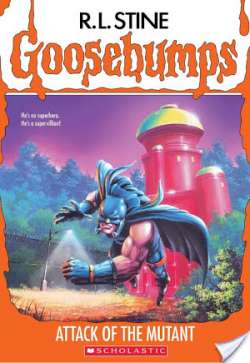
Realizing that he has become lost in a strange part of town, Skipper Matthews, a ravenous comic book collector who's favorite character is an evil super-villain, discovers a building just like the secret headquarters of his idol.
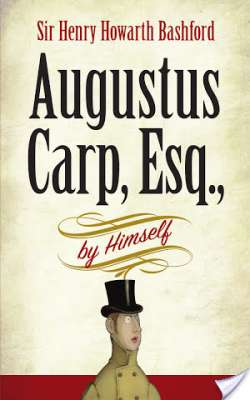
Meet our memoirist, Augustus Carp, a self-proclaimed "good man" who relishes every opportunity to condemn the weaknesses of others while excusing his own failings. In this spoof autobiography, the pompous narrator enthusiastically recounts his mundane achievements with unwitting hilarity, making frequent asides to bemoan the sins of lesser mortals. Much of the story's ironic humor derives from his delivery; the more seriously Carp takes himself, the more ridiculous he appears. This riotous fable is supported by a cast of delightfully eccentric and grotesque characters: Abraham Stool, manufacturer of the famous Adult Gripe Water; schoolteacher Mr. Beerthorpe, inevitably known to his charges as "Beery"; the Rev. Eugene Cake, author of such improving fiction as Gnashers of Teeth; and other memorable personalities. A cult classic and comic gem, the book was originally published anonymously in 1924 and rediscovered decades later, when its author was revealed as a genteel (and discreet) London physician. This edition features the splendidly droll illustrations by Punch artist Marjorie Blood from the original publication.