« Return to all search results
Title Search Results
On March 8, 1421, the largest fleet the world had ever seen set sail from China to "proceed all the way to the ends of the earth to collect tribute from the barbarians beyond the seas." When the fleet returned home in October 1423, the emperor had fallen, leaving China in political and economic chaos. The great ships were left to rot at their moorings and the records of their journeys were destroyed. Lost in the long, self-imposed isolation that followed was the knowledge that Chinese ships had reached America seventy years before Columbus and had circumnavigated the globe a century before Magellan. And they colonized America before the Europeans, transplanting the principal economic crops that have since fed and clothed the world.
Describes how recent archaeological research has transformed long-held myths about the Americas, revealing far older and more advanced cultures with a greater population than were previously thought to have existed.
Reveals how the voyages of Columbus reintroduced plants and animals that had been separated millions of years earlier, documenting how the ensuing exchange of flora and fauna between Eurasia and the Americas fostered a European rise, decimated imperial China and rendered Manila and Mexico City the center of the world for two centuries. Reprint.
It's been decades since anyone set foot on the moon. Now three ordinary teenagers, the winners of NASA's unprecedented, worldwide lottery, are about to become the first young people in space--and change their lives forever. Mia, from Norway, hopes this will be her punk band's ticket to fame and fortune. Midori believes it's her way out of her restrained life in Japan. Antoine, from France, just wants to get as far away from his ex-girlfriend as possible. It's the opportunity of a lifetime, but little do the teenagers know that something sinister is waiting for them on the desolate surface of the moon. And in the black vacuum of space... no one is coming to save them. In this chilling adventure set in the most brutal landscape known to man, highly acclaimed Norwegian novelist Johan Harstad creates a vivid and frightening world of possibilities we can only hope never come true.
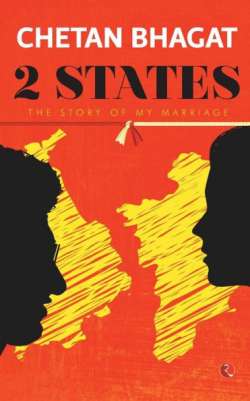
Fourth book by the bestselling author Chetan Bhagat. 2 States is a story about Krish and Ananya. They are from two different states of India, deeply in love and want to get married. Of course, their parents don't agree. To convert their love story into a love marriage, the couple have a tough battle in front of them.
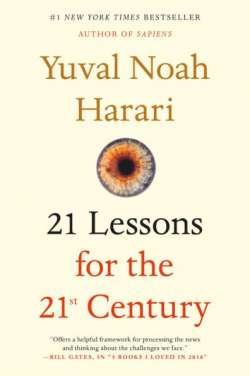
#1 NEW YORK TIMES BESTSELLER • In Sapiens, he explored our past. In Homo Deus, he looked to our future. Now, one of the most innovative thinkers on the planet turns to the present to make sense of today’s most pressing issues. “Fascinating . . . a crucial global conversation about how to take on the problems of the twenty-first century.”—Bill Gates, The New York Times Book Review NAMED ONE OF THE BEST BOOKS OF THE YEAR BY FINANCIAL TIMES AND PAMELA PAUL, KQED How do computers and robots change the meaning of being human? How do we deal with the epidemic of fake news? Are nations and religions still relevant? What should we teach our children? Yuval Noah Harari’s 21 Lessons for the 21st Century is a probing and visionary investigation into today’s most urgent issues as we move into the uncharted territory of the future. As technology advances faster than our understanding of it, hacking becomes a tactic of war, and the world feels more polarized than ever, Harari addresses the challenge of navigating life in the face of constant and disorienting change and raises the important questions we need to ask ourselves in order to survive. In twenty-one accessible chapters that are both provocative and profound, Harari builds on the ideas explored in his previous books, untangling political, technological, social, and existential issues and offering advice on how to prepare for a very different future from the world we now live in: How can we retain freedom of choice when Big Data is watching us? What will the future workforce look like, and how should we ready ourselves for it? How should we deal with the threat of terrorism? Why is liberal democracy in crisis? Harari’s unique ability to make sense of where we have come from and where we are going has captured the imaginations of millions of readers. Here he invites us to consider values, meaning, and personal engagement in a world full of noise and uncertainty. When we are deluged with irrelevant information, clarity is power. Presenting complex contemporary challenges clearly and accessibly, 21 Lessons for the 21st Century is essential reading. “If there were such a thing as a required instruction manual for politicians and thought leaders, Israeli historian Yuval Noah Harari’s 21 Lessons for the 21st Century would deserve serious consideration. In this collection of provocative essays, Harari . . . tackles a daunting array of issues, endeavoring to answer a persistent question: ‘What is happening in the world today, and what is the deep meaning of these events?’”—BookPage (top pick)
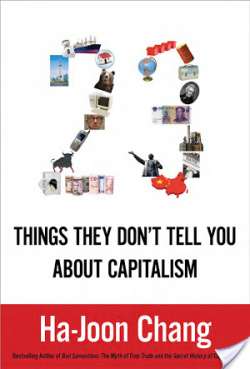
Thing 1: There is no such thing as free market. Thing 4: The washing machine has changed the world more than the Internet. Thing 5: Assume the worst about people, and you get the worst. Thing 13: Making rich people richer doesn't make the rest of us richer. If you've wondered how we did not see the economic collapse coming, Ha-Joon Chang knows the answer: We didn't ask what they didn't tell us about capitalism. This is a lighthearted book with a serious purpose: to question the assumptions behind the dogma and sheer hype that the dominant school of neoliberal economists-the apostles of the freemarket-have spun since the Age of Reagan. Chang, the author of the international bestseller Bad Samaritans, is one of the world's most respected economists, a voice of sanity-and wit-in the tradition of John Kenneth Galbraith and Joseph Stiglitz. 23 Things They Don't Tell You About Capitalism equips readers with an understanding of how global capitalism works-and doesn't. In his final chapter, "How to Rebuild the World," Chang offers a vision of how we can shape capitalism to humane ends, instead of becoming slaves of the market.

A young boy and girl investigate the impenetrable mysteries of the strangely compelling Swinster Pharmacy.
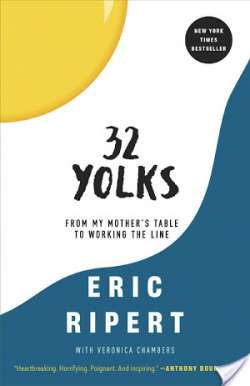
Before he earned his third Michelin star at his iconic restaurant, Le Bernardin, the James Beard Award for Outstanding Chef of the Year, became a regular guest judge on Bravo's Top Chef, even before he knew how to make a proper omelet, Eric Ripert was a young boy in the South of France who felt that his world had come to an end. At the age of five, his parents went through a bitter divorce. Eric moved away with his mother, whose new husband, Serge, quickly grew to resent Eric and seemed to delight in making him miserable. The only place Eric felt at home was the kitchen, where his mother tried to cheer him up with lavish meals, and where his friend Jacques, a local chef, introduced Eric to caviar, chocolate mousse, and a future where his lifelong love of food could become something he shared with other people. This memoir is the story of a young chef coming of age, following Eric's life from childhood through his early twenties, where he finds his home in the brutal, exacting kitchens of legendary chefs like Joel Robouchon