« Return to all search results
Title Search Results
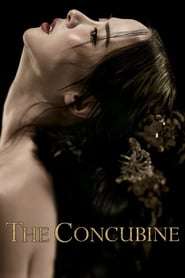
Set during the early Joseon Dynasty, the film begins with the queen mother and former concubine (Park Ji-young) in a precarious position of having no blood ties to the childless king (Jung Chan). She schemes to replace him on the throne with his stepbrother and her submissive young son Seong-won (Kim Dong-wook). Indifferent to his mother’s plans, the timid prince falls in love at first sight with Hwa-yeon (Jo Yeo-jeong), an aristocrat’s daughter, who has already found love with Kwon-yoo (Kim Min-joon), a commoner. The king is eventually poisoned to death by the queen mother, who is desperate to be in power. Hwa-yeon is moved to a closely watched humble residence, with the queen mother planning to assassinate Hwa-yeon and her son to secure her position in the palace.

A mogul merrily funds terrorists to boost his computer sales, by panicking West German government and industry c. 1980, as the third generation of Western European left-wing activists forms, after crippling of the violent Red Army Faction. Released in 1979, largely unavailable until 2004. International kapitalist PJ Lurz's secretary is a gang member, while her Polizeikommissar father-in-law/lover hired Lurz' corporate security force.
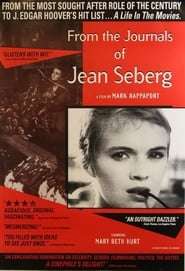
Mark Rappaport's creative bio-pic about actress Jean Seberg is presented in a first-person, autobiographical format (with Seberg played by Mary Beth Hurt). He seamlessly interweaves cinema, politics, American society and culture, and film theory to inform, entertain, and move the viewer. Seberg's many marriages, as well as her film roles, are discussed extensively. Her involvement with the Black Panther Movement and subsequent investigation by the FBI is covered. Notably, details of French New Wave cinema, Russian Expressionist (silent) films, and the careers of Jane Fonda, Vanessa Redgrave, and Clint Eastwood are also intensively examined. Much of the film is based on conjecture, but Rappaport encourages viewers to re-examine their ideas about women in film with this thought-provoking picture.
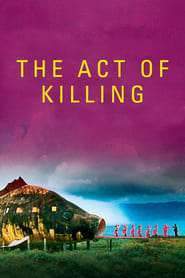
In a place where killers are celebrated as heroes, these filmmakers challenge unrepentant death-squad leaders to dramatize their role in genocide. The result is a surreal, cinematic journey, not only into the memories and imaginations of mass murderers, but also into a frighteningly banal regime of corruption and impunity.

Anna, a French actress, is approached by financial broker Gordon in the Vermeer room of a New York gallery. However, romance does not ensue...

Academy Award®–winning documentary filmmaker Alex Gibney (Taxi to the Dark Side) explores the charged issue of pedophilia in the Catholic Church, following a trail from the first known protest against clerical sexual abuse in the United States and all way to the Vatican.

A gang of South Korean thieves team up with a Hong Kong crew to steal a diamond necklace from a heavily-guarded casino safe in Macau. As the cops close in, old betrayals — and misunderstandings — resurface.
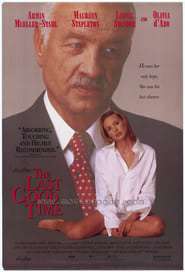
A reclusive aging widower struggling with tax problems has a complete change in his views of life as he has a chance encounter with a young woman who moves in with him briefly.

The movie shows the rise and fall of a cruel and despotic village chief Guimba, and his son Jangine in a fictional village in the Sahel of Mali.

Cinematographer Carlos Macovich met Yuliet Ortega, a young "jinetera" (prostitute) from Havana, when he shot a video in Cuba, starring model Fabiola Quiroz. When he realized that the two women had not seen their respective fathers for many years, he made this documentary, which is also a reflection on the process of filmmaking.