« Return to all search results
Title Search Results

The life of little St. Therese of Lisieux, depicted in minimalist vignettes. Therese and her sisters are all nuns in a Carmelite convent. Her devotion to Jesus and her concept of "the little way" to God are shown clearly, using plain modern language. A sense of angelic simplicity comes across without fancy lights, choirs, or showy miracles.

Macabea has just moved to the big city after her aunt, who raised her, died. She gets a job as a typist and moves into a boarding house with three other women. In her spare time she listens to time Radio Station; on Sundays she likes to ride the subways. She describes herself saying, "I am a typist and a virgin, and I like Coca-Cola." Then she meets Olimpico, a north-easterner like herself, who has dreams of becoming a Congressman.

Rational, exacting, and self-controlled theater director, Henrik Vogler, often stays after rehearsal to think and plan. On this day, Anna comes back, ostensibly looking for a bracelet. She is the lead in his new production of Stindberg's "A Dream Play." She talks of her hatred for her mother, now dead, an alcoholic actress, who was Vogler's star and lover. Vogler falls into a reverie, remembering a day Anna's mother, Rakel, late in life, came after rehearsal to beg him to come to her apartment. He awakes and Anna reveals the reason she has returned: she jolts him into an emotional response, rare for him, and the feelings of a young woman and an older man play out.

When the movie opens, a woman is recalling the events that molded her perspective on the world. Years ago, her husband, a wealthy Western-educated landowner, challenged tradition by providing her with schooling, and inviting her out of the seclusion in which married women were kept, to the consternation of more conservative relatives. Meeting her husband's visiting friend from college, a leader of an economic rebellion against the British, she takes up his political cause, despite her husbands warnings. As the story progresses, the relationship between the woman and the visitor becomes more than platonic, and the political battles, pitting rich against poor and Hindu against Moslem, turn out not to be quite as simple as she had first thought.
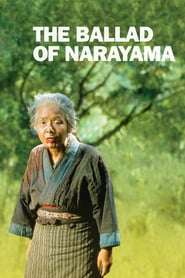
In a small village in a valley everyone who reaches the age of 70 must leave the village and go to a certain mountain top to die. If anyone should refuse he/she would disgrace their family. Old Orin is 69. This winter it is her turn to go to the mountain. But first she must make sure that her eldest son Tatsuhei finds a wife.

This sensuously beautiful film chronicles the activities of four sisters who gather in Kyoto every year to view the cherry blossoms. It paints a vivid portrait of the pre-war lifestyle of the wealthy Makioka family from Osaka, and draws a parallel between their activities and the seasonal variations in Japan.

The Night of San Lorenzo, the night of the shooting stars, is the night when dreams come true in Italian folklore. In 1944, a group of Italians flee their town after hearing rumours that the Nazis plan to blow it up and that the Americans are about to arrive to liberate them.

In June of 1791, a group of passengers in a stagecoach find themselves caught up in the events of the French Revolution, when they find themselves in the city of Varennes when revolutionists arrest the fleeing King Louis.
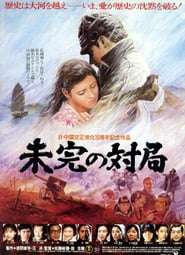
Ten years before the outbreak of the Second World War in Asia, a Japanese Go master and his Chinese rival meet in China to play a game of Go (loosely described as an Asian version of chess). It soon becomes evident that the Chinese master's son is the most talented player that the Japanese master has ever encountered, and he convinces the boy's father to let him bring the child back to Japan to train him as a professional Go player. Years pass, and as the young Chinese master grows to maturity in Japan, the Japanese invasion of China forces him to choose between his triumphant career and his loyalty to his native country. His decision is complicated by his marriage to the daughter of the Japanese master, with whom he has produced a child. His choice will profoundly alter the lives of two families. Their saga serves as a reflection of the tragic relations between their two great countries, and the possibility of reconciliation and healing.

During World War II, Switzerland severely limited refugees: "Our boat is full." A train from Germany halts briefly in an isolated corner of Switzerland. Six people jump off seeking asylum: four Jews, a French child, and a German soldier. They seek temporary refuge with a couple who run a village inn. They pose as a family: the deserter as husband, Judith as his wife, an old man from Vienna as her father, his granddaughter and the French lad, whom they beg to keep silent, as their children. Judith's teenage brother poses as a soldier. The fabrication unravels through chance and the local constable's exact investigation. Whom will the Swiss allow to stay? Who gets deported?