« Return to all search results
Title Search Results
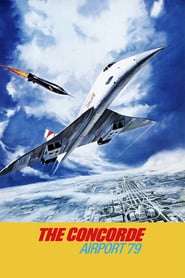
The last of the 'Airport' series again stars George Kennedy as aviation disaster-prone Joe Patroni, this time having to contend with nuclear missiles, the French Air Force and the threat of the plane splitting in two over the Alps!
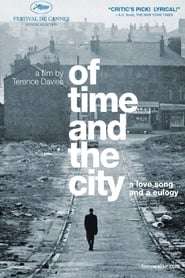
"Of Time and The City" is both a love song and a eulogy to the director's birthplace of Liverpool, England. It is also a response to memory, reflection and the experience of losing a sense of place as the skyline changes and time takes it toll. The visual content of the film consists largely of archival clips of Liverpool from the 1940s to the 1960s, their nostalgic charm darkened by accompanying music and by the counterpoint of Davies’ dry, at times dyspeptic, voice-over narration. His voice thickens with emotion as he recalls the delights of juvenile movie-going or the ritual of a holiday trip to New Brighton, across the River Mersey, and hardens with contempt when he turns his gaze on the hoopla surrounding Queen Elizabeth’s coronation in 1953.
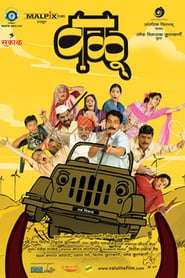
A Forest officer send in a small village to catch a wild bull. He met different people and with help of them he tries to catch the Bull.
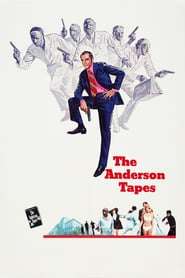
A thief, Duke Anderson, just released from ten years in jail, takes up with his old girlfriend, Ingrid, in her posh apartment. He makes plans to rob the entire building. What he doesn't know is that his every move is recorded on audio and video tape, although he is not the subject of any surveillance.
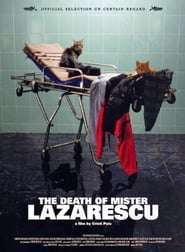
Mr. Lazarescu (Ion Fiscuteanu) is a retired Romanian engineer, spending his time in the company of his cats and booze. When he starts feeling unusually ill, he first seeks painkillers from his neighbors. It soon becomes apparent that Lazarescu is indeed sick, and an ambulance arrives with a nurse (Luminita Gheorghiu) who has a few ideas about what could be the problem. However, a major traffic accident and poor organization leaves little room in Romanian hospitals for the fading Lazarescu.
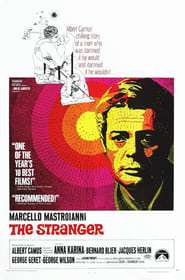
The Stranger is a literal (but still very cinematic) adaptation of the novel by Albert Camus. Marcello Mastrioanni stars as Meursault, a man who feels utterly isolated from everyone and everything around him. This alienation results in sudden, inexplicable bursts of violence, culminating in murder. The subsequent trial of Meursault manages to convey the oppressive heat of its Algerian setting with director Luchino Visconti's usual veneer of elegant decadence. Though set in the 1930s, the sensibilities of the film were very much attuned to the 1960s: the problem was that Camus' sentiments had been adopted by so many other filmmakers of the period that The Stranger seemed rather commonplace. The film was originally released in Italy as Lo Staniero.
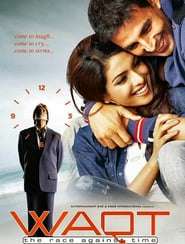
A chronic illness leaves Ishwar with only a few months to live. His son Aditya is extremely reckless. To make him realise his responsibilities, Ishwar throws his son out of the house.
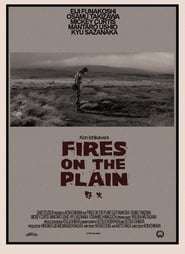
In the closing days of WWII remnants of the Japanese army in Leyte are abandoned by their command and face certain starvation.
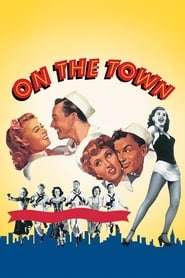
Three sailors - Gabey, Chip and Ozzie - let loose on a 24-hour pass in New York and the Big Apple will never be the same! Gabey falls head over heels for "Miss Turnstiles of the Month" (he thinks she's a high society deb when she's really a 'cooch dancer at Coney Island); innocent Chip gets highjacked (literally) by a lady cab driver; and Ozzie becomes the object of interest of a gorgeous anthropologist who thinks he's the perfect example of a "prehistoric man". Wonderful music and terrific shots of New York at its best.
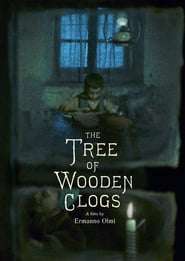
The life inside a farm in Italy at the beginning of the century. Many poor country families live there, and the owner pays them by their productivity. One of the families has a very clever child. They decide to send him to school instead of make him help them, although this represents a great sacrifice. The boy has to wake up very early and walk several miles to get to the school. One day the boy's shoes break when returning home, but they do not have money to buy other. What can they do?