« Return to all search results
Title Search Results
“A landmark work of lesbian fiction.” —The New York Times Jane Rule’s first novel—now a classic of gay and lesbian literature—established her as a foremost writer of the vagaries and yearnings of the female heart Against the backdrop of Reno, Nevada, in the late 1950s, award-winning author Jane Rule chronicles a love affair between two women. When Desert of the Heart opens, Evelyn Hall is on a plane that will take her from her old life in Oakland, California, to Reno, where she plans to divorce her husband of sixteen years. A voluntary exile in a brave new world, she meets a woman who will change her life. Fifteen years younger, Ann Childs works as a change apron in a casino. Evelyn is instantly drawn to the fiercely independent Ann, and their friendship soon evolves into a romantic relationship. An English professor who had always led a conventional life, Evelyn suddenly finds all her beliefs about love, morality, and identity called into question. Peopled by a cast of unforgettable characters, this is a novel that dares to ask whether love between two women can last.
Seph, an orphaned and untrained wizard who is unable to control his growing powers, is sent to a secluded boys' school in Maine where the headmaster promises to train him in magic and initiate him into his mysterious order of wizards.
Details the achievements of creating a desert civilization and projects on the future problems of limited groundwater reserves, silting up of reservoirs, and contamination of soil
When Jacques Lusseyran was an eight-year-old Parisian schoolboy, he was blinded in an accident. He finished his schooling determined to participate in the world around him. In 1941, when he was seventeen, that world was Nazi-occupied France. Lusseyran formed a resistance group with fifty-two boys and used his heightened senses to recruit the best. Eventually, Lusseyran was arrested and sent to the Buchenwald concentration camp in a transport of two thousand resistance fighters. He was one of only thirty from the transport to survive. His gripping story is one of the most powerful and insightful descriptions of living and thriving with blindness, or indeed any challenge, ever published.
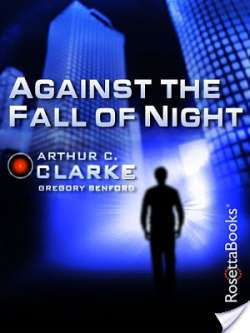
The renowned science fiction author’s landmark novel of the last human born on a far future world—and his quest for the truth about existence. Living in the ten-billion-year-old city of Diaspar, Alvin is the last child born of humanity, and he is intensely curious about the outside world. But according to the oldest histories kept by the city fathers, there is no outside world—it was destroyed by the Invaders millions of years ago. One day, Alvin finds a rock with an inscription seemingly meant for him: “There is a better way. Give my greetings to the Keeper of the Records. Alaine of Lyndar.” This cryptic message takes Alvin on a quest to discover humanity’s true past—and its future. Originally published in the November 1948 issue of Startling Stories, Against the Fall of Night is a rich and intensely poetic vision of a distant future that’s sure to delight fans of Clarke and science fiction as a genre. “Arthur C. Clarke is one of the truly prophetic figures of the space age . . . The colossus of science fiction.” —The New Yorker
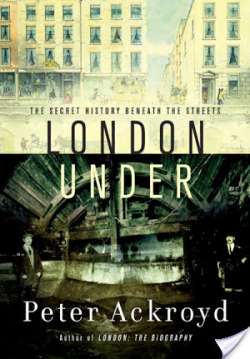
In this vividly descriptive short study, Peter Ackroyd tunnels down through the geological layers of London, meeting the creatures that dwell in darkness and excavating the lore and mythology beneath the surface. There is a Bronze Age trackway below the Isle of Dogs, Anglo-Saxon graves rest under St. Pauls, and the monastery of Whitefriars lies beneath Fleet Street. To go under London is to penetrate history, and Ackroyd's book is filled with the stories unique to this underworld: the hydraulic device used to lower bodies into the catacombs in Kensal Green cemetery; the door in the plinth of the statue of Boadicea on Westminster Bridge that leads to a huge tunnel packed with cables for gas, water, and telephone; the sulphurous fumes on the Underground's Metropolitan Line. Highly imaginative and delightfully entertaining, London Under is Ackroyd at his best.
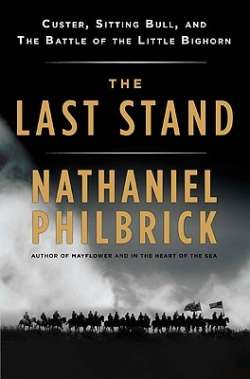
"An engrossing and tautly written account of a critical chapter in American history." --Los Angeles Times Nathaniel Philbrick, author of In the Hurricane's Eye, Pulitzer Prize finalist Mayflower, and Valiant Ambition, is a historian with a unique ability to bring history to life. The Last Stand is Philbrick's monumental reappraisal of the epochal clash at the Little Bighorn in 1876 that gave birth to the legend of Custer's Last Stand. Bringing a wealth of new information to his subject, as well as his characteristic literary flair, Philbrick details the collision between two American icons- George Armstrong Custer and Sitting Bull-that both parties wished to avoid, and brilliantly explains how the battle that ensued has been shaped and reshaped by national myth.
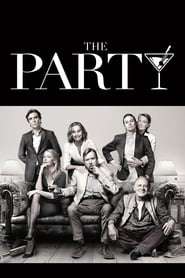
Various individuals think they’re coming together for a party in a private home, but a series of revelations results in a huge crisis that throws their belief systems – and their values – into total disarray.
Enzo Ceccotti comes into contact with a radioactive substance, then accidently discovers he has superpowers. A touchy, navel-gazing introvert, he’s sure his new capabilities will do wonders for his life of crime, but that all changes when he meets Alessia, who’s convinced he’s the hero from the famous Japanese comic strip, Steel Jeeg Robot.
In a shady corner of Kingsport Bay at the outskirts of St Armando, Bwana and his trusted sidekick Kito struggle to make ends meet at their run-down gas station. Little do they know that they are about to be thrown into a spine-tingling adventure that will take them far from home and right into a twisting plot of corruption and danger. In the first chapter of The Journey Down, the search for a lost journal leads to forgotten secrets of the mysterious Underland. Follow Bwana and Kito as they puzzle their way forward and begin to uncover the true fate of their long lost father, Captain Kaonandodo.