« Return to all search results
Title Search Results
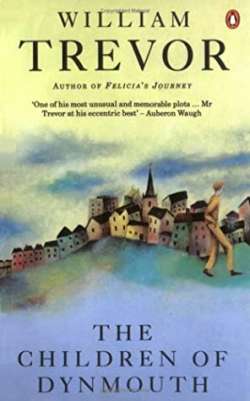
The Children Of Dynmouth - a classic prize-winning novel by William Trevor Penguin Decades bring you the novels that helped shape modern Britain. The 1970s was a decade of anger and discontent. Britain endured power cuts and strikes. America pulled out of Vietnam and saw its President resign from office. Feminism and face lifts vied for women's hearts (and minds). And for many, prog rock, punk and disco weren't just music but ways of life. William Trevor's The Children of Dynmouth (Winner of the Whitbread Award and shortlisted for the Booker Prize) was first published in 1976 and is a classic account of evil lurking in the most unlikely places. In it we follow awkward, lonely, curious teenager Timothy Gedge as he wanders around the bland seaside town of Dynmouth. Timothy takes a prurient interest in the lives of the adults there, who only realise the sinister purpose to which he seeks to put his knowledge too late. 'A small masterpiece of understatement ... a work of rare compassion' Joyce Carol Oates, New York Times If you enjoyed The Story of Lucy Gault and Love and Summer, you will love this book. It will also be adored by readers of Colm Toibin and William Boyd. William Trevor was born in Mitchelstown, County Cork. He has written eighteen novels and novellas, and hundreds of short stories, for which he has won a number of prizes including the Hawthornden Prize, the Yorkshire Post Book of the Year Award, the Whitbread Book of the Year Award and the David Cohen Literature Prize in recognition of a lifetime's literary achievement. In 2002 he was knighted for his services to literature. His books in Penguin are: After Rain; A Bit on the Side; Bodily Secrets; Cheating at Canasta; The Children of Dynmouth; The Collected Stories (Volumes One and Two); Death in Summer; Felicia's Journey; Fools of Fortune; The Hill Bachelors; Love and Summer; The Mark-2 Wife; Selected Stories; The Story of Lucy Gault and Two Lives.
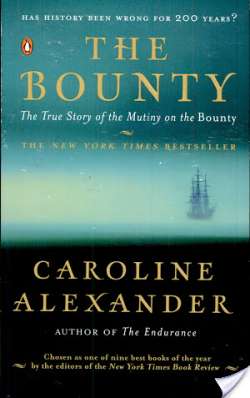
An account of the events surrounding the conflict aboard the HMS Bounty focuses on the court-martial of its ten mutineers, citing the breakdown and exile of Fletcher Christian and Lieutenant Bligh's navigation talents.
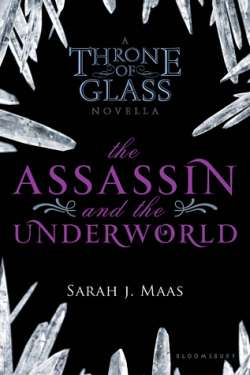
When the King of the Assassins gives Celaena Sardothien a special assignment that will help fight slavery in the kingdom, Celaena jumps at the chance to strike a blow against the evil practice. The mission is a dark and deadly affair that takes Celaena from the rooftops of the city to the bottom of the sewer - and she doesn't like what she finds there.

Mix a Hitchcock masterpiece with a juicy spy novel, add a dash of Monty Python and you have The 39 Steps, a fast-paced whodunit for anyone who loves the magic of theatre! This 2-time Tony® and Drama Desk Award-winning treat is packed with nonstop laughs, over 150 zany characters (played by a ridiculously talented cast of 4), an on-stage plane crash, handcuffs, missing fingers and some good old-fashioned romance!
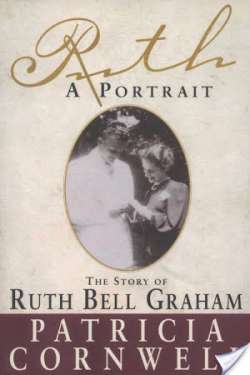
Ruth Bell Graham is known as the wife of evangelist Billy Graham. It was Ruth who influenced Billy, as his most trusted life-partner. In Ruth, a Portrait, we meet this fascinating and remarkable woman. Brimming with anecdotes, this is a breathtaking journey, with stops at many of this century's epoch-making events. The childhood years of the future Mrs. Billy Graham were spent light-years away--in the China of the 1920s and 1930s. The daughter of medical missionaries, she and her family were caught in a crucible of unspeakable hardship; in addition to pestilence and plague, there was the unstable political and military turmoil surrounding the Nationalist government, the Communists, and the Japanese invaders. These hazardous realities shaped Ruth Bell and her family, a family inured to difficulties, but buoyed up by their deep belief in God's abiding will. Virtually raised by the Grahams, the author is a repository of Ruth Bell Graham's stories and has seen firsthand the spirit of this courageous woman. Patricia Cornwell not only gives readers a full, rounded, and intimate portrait of Ruth Bell Graham, but also insight into the life of the Graham family and particularly Billy Graham. From the Trade Paperback edition.

“A comprehensive, entertaining, and compelling argument for how rebuilding social infrastructure can help heal divisions in our society and move us forward.”—Jon Stewart NAMED ONE OF THE BEST BOOKS OF THE YEAR BY NPR • “Engaging.”—Mayor Pete Buttigieg, The New York Times Book Review (Editors’ Choice) We are living in a time of deep divisions. Americans are sorting themselves along racial, religious, and cultural lines, leading to a level of polarization that the country hasn’t seen since the Civil War. Pundits and politicians are calling for us to come together and find common purpose. But how, exactly, can this be done? In Palaces for the People, Eric Klinenberg suggests a way forward. He believes that the future of democratic societies rests not simply on shared values but on shared spaces: the libraries, childcare centers, churches, and parks where crucial connections are formed. Interweaving his own research with examples from around the globe, Klinenberg shows how “social infrastructure” is helping to solve some of our most pressing societal challenges. Richly reported and ultimately uplifting, Palaces for the People offers a blueprint for bridging our seemingly unbridgeable divides. LONGLISTED FOR THE ANDREW CARNEGIE MEDAL FOR EXCELLENCE IN NONFICTION “Just brilliant!”—Roman Mars, 99% Invisible “The aim of this sweeping work is to popularize the notion of ‘social infrastructure'—the ‘physical places and organizations that shape the way people interact'. . . . Here, drawing on research in urban planning, behavioral economics, and environmental psychology, as well as on his own fieldwork from around the world, [Eric Klinenberg] posits that a community’s resilience correlates strongly with the robustness of its social infrastructure. The numerous case studies add up to a plea for more investment in the spaces and institutions (parks, libraries, childcare centers) that foster mutual support in civic life.”—The New Yorker “Palaces for the People—the title is taken from the Scottish-American industrialist and philanthropist Andrew Carnegie’s description of the hundreds of libraries he funded—is essentially a calm, lucid exposition of a centuries-old idea, which is really a furious call to action.”—New Statesman “Clear-eyed . . . fascinating.”—Psychology Today
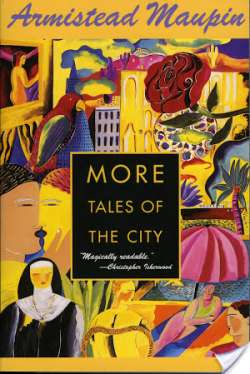
Inspiration for the Netflix Limited Series, Tales of the City The second novel in the beloved Tales of the City series, Armistead Maupin’s best-selling San Francisco saga. The tenants of 28 Barbary Lane have fled their cozy nest for adventures far afield. Mary Ann Singleton finds love at sea with a forgetful stranger, Mona Ramsey discovers her doppelgänger in a desert whorehouse, and Michael Tolliver bumps into his favorite gynecologist in a Mexican bar. Meanwhile, their venerable landlady takes the biggest journey of all—without ever leaving home.

“Wild satire . . . The feckless protagonist, Arthur Dent, is reminiscent of Vonnegut heroes.”—Chicago Tribune The unhappy inhabitants of planet Krikkit are sick of looking at the night sky above their heads—so they plan to destroy it. The universe, that is. Now only five individuals stand between the killer robots of Krikkit and their goal oftotal annihilation. They are Arthur Dent, a mild-mannered space and time traveler who tries to learn how to fly by throwing himself at the ground and missing; Ford Prefect, his best friend, who decides to go insane to see if he likes it; Slartibartfast, the indomitable vice president of the Campaign for Real Time, who travels in a ship powered by irrational behavior; Zaphod Beeblebrox, the two-headed, three-armed ex-president of the galaxy; and Trillian, the sexy space cadet who is torn between a persistent Thunder God and a very depressed Beeblebrox. How will it all end? Will it end? Only this stalwart crew knows as they try to avert “universal” Armageddon and save life as we know it—and don’t know it! “Adams is one of those rare treasures: an author who, one senses, has as much fun writing as one has reading.”—Arizona Daily Star
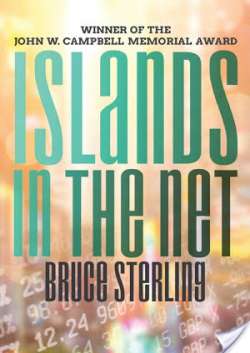
In a near-future new age of corporate control, hacker mercenaries, and electronic terrorism, a public relations executive on the rise finds herself caught in the violent epicenter of a data war Two decades into the twenty-first century, the world’s nations are becoming irrelevant. Corporations are the true global powers, with information the most valuable currency, while the smaller island nations have become sanctuaries for data pirates and terrorists. A globe-trotting PR executive for the large corporate economic democracy Rizome Industries Group, Laura Webster is present when a foreign representative is assassinated on Rizome soil during a conference for offshore data havens. Dispatched immediately on an international mission of diplomacy, Laura hopes she can make a difference in a volatile, unsteady world, but instead finds herself trapped on the front lines of rapidly escalating third-world hostilities and caught up in an inescapable net of conspiracy, terrorism, post-millennial voodoo, and electronic warfare. During the 1980s, science fiction luminary Bruce Sterling envisioned the future . . . and hit it almost dead-on. The author who, along with William Gibson, Neal Stephenson, and Rudy Rucker, helped create and define the cyberpunk subgenre imagines a world of tomorrow in Islands in the Net that bears a striking—and disturbing—resemblance to our present-day information-age reality. Nominated for the Hugo and Locus Awards and winner of the John W. Campbell Memorial Award, Sterling’s extraordinary novel is a gripping, eye-opening, and remarkably prescient science fiction classic.
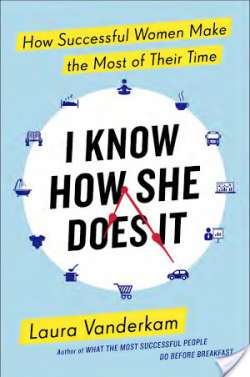
Everyone has an opinion, anecdote, or horror story about women and work. Now the acclaimed author of What the Most Successful People Do Before Breakfast shows how real working women with families are actually making the most of their time. “Having it all” has become the subject of countless books, articles, debates, and social media commentary, with passions running high in all directions. Many now believe this to be gospel truth: Any woman who wants to advance in a challenging career has to make huge sacrifices. She’s unlikely to have a happy marriage, quality time with her kids (assuming she can have kids at all), a social life, hobbies, or even a decent night’s sleep. But what if balancing work and family is actually not as hard as it’s made out to be? What if all those tragic anecdotes ignore the women who quietly but consistently do just fine with the juggle? Instead of relying on scattered stories, time management expert Laura Vanderkam set out to add hard data to the debate. She collected hour-by-hour time logs from 1,001 days in the lives of women who make at least $100,000 a year. And she found some surprising patterns in how these women spend the 168 hours that every one of us has each week. Overall, these women worked less and slept more than they assumed they did before they started tracking their time. They went jogging or to the gym, played with their children, scheduled date nights with their significant others, and had lunches with friends. They made time for the things that gave them pleasure and meaning, fitting the pieces together like tiles in a mosaic—without adhering to overly rigid schedules that would eliminate flexibility and spontaneity. Vanderkam shares specific strategies that her subjects use to make time for the things that really matter to them. For instance, they . . . * Work split shifts (such as seven hours at work, four off, then another two at night from home). This allows them to see their kids without falling behind professionally. * Get creative about what counts as quality family time. Breakfasts together and morning story time count as much as daily family dinners, and they’re often easier to manage. * Take it easy on the housework. You can free up a lot of time by embracing the philosophy of “good enough” and getting help from other members of your household (or a cleaning service). * Guard their leisure time. Full weekend getaways may be rare, but many satisfying hobbies can be done in small bursts of time. An hour of crafting feels better than an hour of reality TV. With examples from hundreds of real women, Vanderkam proves that you don’t have to give up on the things you really want. I Know How She Does It will inspire you to build a life that works, one hour at a time.