« Return to all search results
Title Search Results
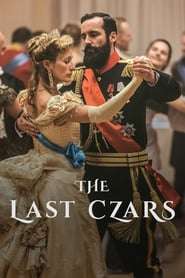
When social upheaval sweeps Russia in the early 20th century, Czar Nicholas II resists change, sparking a revolution and ending a dynasty.
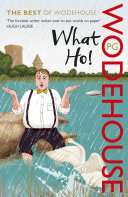
We all know Jeeves and Wooster, but which is the best Jeeves story? We all know Blandings, but which is the funniest tale about Lord Emsworth and his adored prize-winning pig? And would the best of Ukridge, or the yarns of the Oldest Member, or Wodehouse's Hollywood stories outdo them? This bumper anthology allows you to choose, bringing you the cream of the crop of stories by the twentieth century's greatest humorous writer. There are favourites aplenty in this selection, which has been compiled with enthusiastic support from P.G. Wodehouse societies around the world. With additional material including novel extracts, working drafts, articles, letters and poems, this anthology provides the best overall celebration of side-splitting humour and sheer good nature available in the pages of any book.
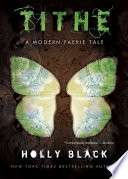
Do you believe in faeries? Not the soft, gentle kind, but the sinister, feral kind ~ the ones that wreak havoc on everything in their path... A fairy-tale with a difference from Holly Black, bestselling author of The Spiderwick Chronicles and The Cruel Prince. Sixteen-year-old Kaye is a modern nomad. Fierce and independent, she travels from city to city with her mother's rock band, until an ominous attack forces them back to her childhood home. To the place where she used to see Faeries. They're still there. But Kaye's not a child anymore and this time she's dragged into the thick of their dangerous, frightening world. A realm where black horses dwell beneath the sea, desperate to drown you … where the sinister Thistlewitch divines dark future s… and where beautiful faerie knights are driven to perform acts of brutal depravity for the love of their uncaring queens. Once there, Kaye finds herself an unwilling pawn in an ancient power struggle between two rival faerie kingdoms - a struggle that could end in her death…
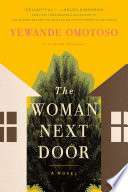
Longlisted for the Bailey's Women's Prize for Fiction • A Finalist for the Aidoo-Snyder Book Prize • One of Publishers Weekly's Writers to Watch • One of The Millions' and Refinery 29's Most Anticipated Books of the Year • One of the Best Black Heritage Reads (Essence Magazine) Loving thy neighbor is easier said than done. Hortensia James and Marion Agostino are neighbors. One is black, the other white. Both are successful women with impressive careers. Both have recently been widowed, and are living with questions, disappointments, and secrets that have brought them shame. And each has something that the woman next door deeply desires. Sworn enemies, the two share a hedge and a deliberate hostility, which they maintain with a zeal that belies their age. But, one day, an unexpected event forces Hortensia and Marion together. As the physical barriers between them collapse, their bickering gradually softens into conversation, which yields a discovery of shared experiences. But are these sparks of connection enough to ignite a friendship, or is it too late to expect these women to change? The U.S. debut of a finalist for the Etisalat Prize for Literature, The Woman Next Door is a winning story of the common ground we sometimes find in unexpected places, told with wit and wry humor.
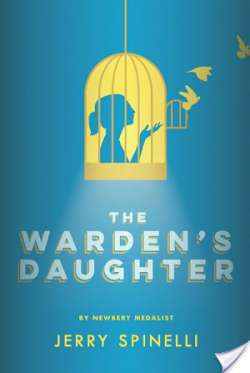
Living with her warden father in an apartment above a 1950s prison, Cammie O'Reilly struggles to come to terms with the loss of her mother, who died saving her from harm when she was a baby, and interacts with some of the reformed inmates.
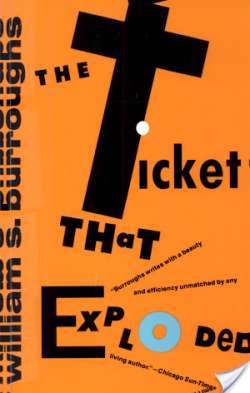
In The Ticket That Exploded, William S. Burroughs’s grand “cut-up” trilogy that starts with The Soft Machine and continues through Nova Express reaches its climax as inspector Lee and the Nova Police engage the Nova Mob in a decisive battle for the planet. Only Burroughs could make such a nightmare vision of scientists and combat troops, of ad men and con men whose deceitful language has spread like an incurable disease be at once so frightening and so enthralling.

Muna has never known his father -- a samurai, a noble warrior. But Muna's mother has told Muna how he will know him one day: by the sign of the chrysanthemum. When his mother dies, Muna travels to the capital of twelfth-century Japan, a bewildering city on the verge of revolution. He finds a haven there, as servant to the great swordsmith, Fukuji. But Muna cannot forget his dream: He must find his father. Only then will he have power and a name to be reckoned with. Only then will he become a man.
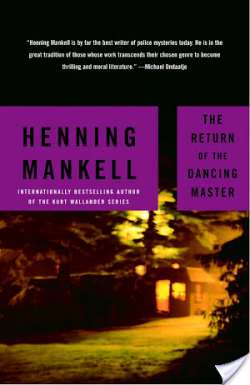
Fifty-four years after war criminals are hanged in ruined Nazi Germany, a retired police officer is found slaughtered on his farm in Sweden, leading a former colleague to investigate and to uncover the links between the death and global Neo-Nazi activity. By the author of The Dogs of Riga. Reprint. 25,000 first printing.

Longlisted for the 2016 National Book Award for Fiction Finalist for the Baileys Prize for Women's Fiction An exuberant, one-of-a-kind novel about love and family, war and nature, new money and old values by a brilliant New Yorker contributor The Portable Veblen is a dazzlingly original novel that’s as big-hearted as it is laugh-out-loud funny. Set in and around Palo Alto, amid the culture clash of new money and old (antiestablishment) values, and with the specter of our current wars looming across its pages, The Portable Veblen is an unforgettable look at the way we live now. A young couple on the brink of marriage—the charming Veblen and her fiancé Paul, a brilliant neurologist—find their engagement in danger of collapse. Along the way they weather everything from each other’s dysfunctional families, to the attentions of a seductive pharmaceutical heiress, to an intimate tête-à-tête with a very charismatic squirrel. Veblen (named after the iconoclastic economist Thorstein Veblen, who coined the term “conspicuous consumption”) is one of the most refreshing heroines in recent fiction. Not quite liberated from the burdens of her hypochondriac, narcissistic mother and her institutionalized father, Veblen is an amateur translator and “freelance self”; in other words, she’s adrift. Meanwhile, Paul—the product of good hippies who were bad parents—finds his ambition soaring. His medical research has led to the development of a device to help minimize battlefield brain trauma—an invention that gets him swept up in a high-stakes deal with the Department of Defense, a Bizarro World that McKenzie satirizes with granular specificity. As Paul is swept up by the promise of fame and fortune, Veblen heroically keeps the peace between all the damaged parties involved in their upcoming wedding, until she finds herself falling for someone—or something—else. Throughout, Elizabeth McKenzie asks: Where do our families end and we begin? How do we stay true to our ideals? And what is that squirrel really thinking? Replete with deadpan photos and sly appendices, The Portable Veblen is at once an honest inquiry into what we look for in love and an electrifying reading experience. From the Hardcover edition.
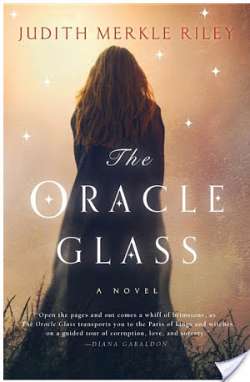
New York Times and USA Today Bestseller! "Absorbing and arresting." —New York Times "Fascinating and factual." —Los Angeles Times "Chilly, witty, and completely engrossing ... great, good fun." — Kirkus Reviews "An outstanding historical novel of 17th–century France ... based on a real–life scandal known as the Affaire des Poisons, this tale is riveting from start to finish." —Library Journal For a handful of gold, Madame de Morville will read your future in a glass of swirling water. You'll believe her, because you know she's more than 150 years old and a witch, and she has all of Paris in the palm of her hand. But Madame de Morville hides more behind her black robes than you know. Her real age, the mother and uncle who left her for dead, the inner workings of the most secret society of Parisian witches: none of these truths would help her outwit the rich who so desperately want the promise of the future. After all, it's her own future she must control , no matter how much it is painted with uncertainty and clouded by vengeance. "Take a full cup of wit, two teaspoons of brimstone, and a dash of poison, and you have Judith Merkle Riley's mordant, compelling tale of an ambitious young woman who disguises herself as an ancient prophetess in order to gain entry into the dangerous, scheming glamour of the Sun King's court. Based on scandalous true events, The Oracle Glass brims with our human foibles, passions, and eccentricities; it's a classic of the genre and unlike any historical novel you have ever read." —C. W. Gortner, author of The Confessions of Catherine de Medici