« Return to all search results
Title Search Results
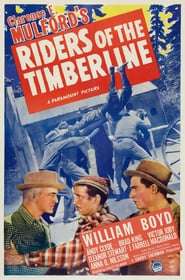
Hopalong Cassidy and Johnny Nelson ride to the mountains to help a man and his daughter save their logging business from someone who is sabotaging their efforts.
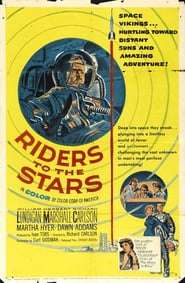
Three men gamble their lives in space to change the history of the world
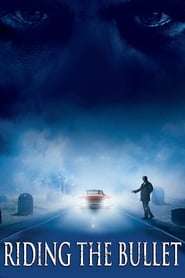
Set in 1969, Alan Parker (Jackson) is a young artist, studying at the University of Maine. He becomes obsessed with death, and believing he is losing his girlfriend, Jessica (Christensen), he tries to commit suicide on his birthday but his friends manage to stop him, and he recovers. He receives news that his mother is dying and decides to hitchhike, in an attempt to reach his dying mom.
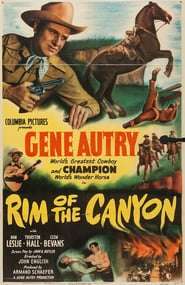
20 years ago, 3 men robbed a stage and hid $30,000. They were caught and sent to prison by Marshal Steve Autry (Also played by Gene Autry). 20 years later, the men bust out of prison and return to the ghost town where they stashed their treasure searching. Steve's grandson picks up where Steve left off to foil the plans of the outlaws.
While spending time at her grandparent's secluded summerhouse to clean up the place after her grandmother's death, a young woman is plagued by horrible visions and dreams of tragic past events.
The Oxford History of the United States is by far the most respected multi-volume history of our nation. In this Pulitzer prize-winning, critically acclaimed addition to the series, historian Daniel Walker Howe illuminates the period from the battle of New Orleans to the end of the Mexican-American War, an era when the United States expanded to the Pacific and won control over the richest part of the North American continent. A panoramic narrative, What Hath God Wrought portrays revolutionary improvements in transportation and communications that accelerated the extension of the American empire. Railroads, canals, newspapers, and the telegraph dramatically lowered travel times and spurred the spread of information. These innovations prompted the emergence of mass political parties and stimulated America's economic development from an overwhelmingly rural country to a diversified economy in which commerce and industry took their place alongside agriculture. In his story, the author weaves together political and military events with social, economic, and cultural history. Howe examines the rise of Andrew Jackson and his Democratic party, but contends that John Quincy Adams and other Whigs--advocates of public education and economic integration, defenders of the rights of Indians, women, and African-Americans--were the true prophets of America's future. In addition, Howe reveals the power of religion to shape many aspects of American life during this period, including slavery and antislavery, women's rights and other reform movements, politics, education, and literature. Howe's story of American expansion culminates in the bitterly controversial but brilliantly executed war waged against Mexico to gain California and Texas for the United States. Winner of the New-York Historical Society American History Book Prize Finalist, 2007 National Book Critics Circle Award for Nonfiction The Oxford History of the United States The Oxford History of the United States is the most respected multi-volume history of our nation. The series includes three Pulitzer Prize winners, a New York Times bestseller, and winners of the Bancroft and Parkman Prizes. The Atlantic Monthly has praised it as "the most distinguished series in American historical scholarship," a series that "synthesizes a generation's worth of historical inquiry and knowledge into one literally state-of-the-art book." Conceived under the general editorship of C. Vann Woodward and Richard Hofstadter, and now under the editorship of David M. Kennedy, this renowned series blends social, political, economic, cultural, diplomatic, and military history into coherent and vividly written narrative.
In 5th Century, two disgruntled Roman soldiers help King Ullic Pendragon create an independent Britain. By the author of The Crystal Cave.
The second thrilling account of #1 New York Times bestselling author Clive Cusslers's real-life search for lost ships, planes, and other marvels that changed history. For decades, Clive Cussler’s real-life NUMA®, the National Underwater and Marine Agency, has scoured rivers and seas in search of lost ships of historic significance. His teams have been inundated by tidal waves and beset by obstacles—both human and natural—but the results, and the stories behind them, have been dramatic. In this follow-up to their bestselling first account, The Sea Hunters, Cussler and colleague Craig Dirgo provide another extraordinary narrative of their true seagoing—and land—adventures, including their searches for the famous ghost ship Mary Celeste, found floating off the Azores in 1874 with no one on board; the Carpathia, the ship that rescued the Titanic survivors and was itself lost to U-boats six years later; and L’Oiseau Blanc, the airplane that almost beat The Spirit of St. Louis across the Atlantic before disappearing in the Maine woods. All these, plus steamboats, ironclads, a seventeenth century flagship, a certain famous PT boat, and even a dirigible, are tantalizing targets as Cussler proves again that truth can be “at least as fun, and sometimes stranger, than fiction” (Men’s Journal).
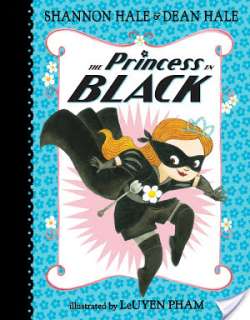
Hiding her secret identity as a monster-fighting superhero, Princess Magnolia interrupts her fancy tea with the unsuspecting Duchess Wigtower to stop a big blue monster from endangering her kingdom's goats. By the author of the Newbery Honor-winning Princess Academy.
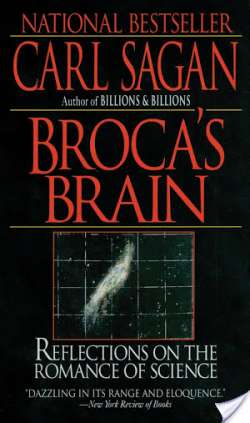
A fascinating book on the joys of discovering how the world works, by the Pulitzer Prize–winning author of Cosmos and Shadows of Forgotten Ancestors. “Magnificent . . . Delightful . . . A masterpiece. A message of tremendous hope for humanity . . . While ever conscious that human folly can terminate man’s march into the future, Sagan nonetheless paints for us a mind-boggling future: intelligent robots, the discovery of extraterrestrial life and its consequences, and above all the challenge and pursuit of the mystery of the universe.”—Chicago Tribune “Go out and buy this book, because Carl Sagan is not only one of the world’s most respected scientists, he’s a great writer. . . . I can give a book no greater accolade than to say I’m planning on reading it again. And again. And again.”—The Miami Herald “The brilliant astronomer . . . is persuasive, provocative and readable.”—United Press International “Closely reasoned, impeccably researched, gently humorous, utterly devastating.”—The Washington Post