« Return to all search results
Title Search Results
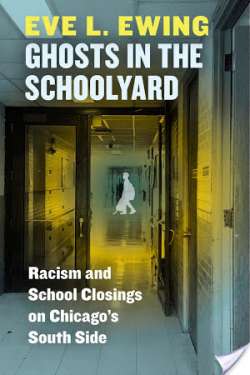
"Failing schools. Underprivileged schools. Just plain bad schools." That's how Eve L. Ewing opens Ghosts in the Schoolyard: describing Chicago Public Schools from the outside. The way politicians and pundits and parents of kids who attend other schools talk about them, with a mix of pity and contempt. But Ewing knows Chicago Public Schools from the inside: as a student, then a teacher, and now a scholar who studies them. And that perspective has shown her that public schools are not buildings full of failures--they're an integral part of their neighborhoods, at the heart of their communities, storehouses of history and memory that bring people together. Never was that role more apparent than in 2013 when Mayor Rahm Emanuel announced an unprecedented wave of school closings. Pitched simultaneously as a solution to a budget problem, a response to declining enrollments, and a chance to purge bad schools that were dragging down the whole system, the plan was met with a roar of protest from parents, students, and teachers. But if these schools were so bad, why did people care so much about keeping them open, to the point that some would even go on a hunger strike? Ewing's answer begins with a story of systemic racism, inequality, bad faith, and distrust that stretches deep into Chicago history. Rooting her exploration in the historic African American neighborhood of Bronzeville, Ewing reveals that this issue is about much more than just schools. Black communities see the closing of their schools--schools that are certainly less than perfect but that are theirs--as one more in a long line of racist policies. The fight to keep them open is yet another front in the ongoing struggle of black people in America to build successful lives and achieve true self-determination.
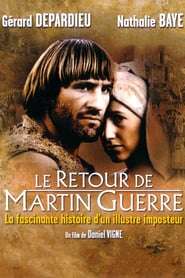
During the medieval times, Martin Guerre returns to his hometown in the middle of France, after being away in the war since he was a child. Nobody recognise him, and the people who knew him suspect he is not Martin, but he knows all about his family and friends, even the most unusual things. Is this man really Martin Guerre?
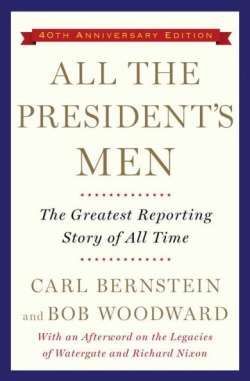
It began with a break-in at the Democratic National Committee headquarters in Washington DC, on 17 June 1972. Bob Woodward, a journalist for the Washington Post, was called into the office on a Saturday morning to cover the story. Carl Bernstein, a political reporter on the Post, was also assigned. They soon learned this was no ordinary burglary. Following lead after lead, Woodward and Bernstein picked up a trail of money, conspiracy and high-level pressure that ultimately led to the doors of the Oval Office. Men very close to the President were implicated, and then Richard Nixon himself. Over a period of months, Woodward met secretly with Deep Throat, for decades the most famous anonymous source in the history of journalism. As he and Bernstein pieced the jigsaw together, they produced a series of explosive stories that would not only win the Post a Pulitzer Prize, they would bring about the President's scandalous downfall. ALL THE PRESIDENT'S MEN documents this amazing story. Taut, gripping and fascinating, it is a classic of its kind -- the true story of the events that changed the American presidency.
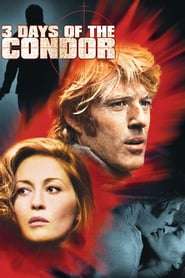
A bookish CIA researcher finds all his co-workers dead, and must outwit those responsible until he figures out who he can really trust.
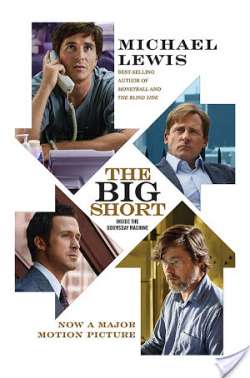
The #1 New York Times bestseller—Now a Major Motion Picture from Paramount Pictures From the author of The Blind Side and Moneyball, The Big Short tells the story of four outsiders in the world of high-finance who predict the credit and housing bubble collapse before anyone else. The film adaptation by Adam McKay (Anchorman I and II, The Other Guys) features Academy Award® winners Christian Bale, Brad Pitt, Melissa Leo and Marisa Tomei; Academy Award® nominees Steve Carell and Ryan Gosling. When the crash of the U.S. stock market became public knowledge in the fall of 2008, it was already old news. The real crash, the silent crash, had taken place over the previous year, in bizarre feeder markets where the sun doesn’t shine and the SEC doesn’t dare, or bother, to tread. Who understood the risk inherent in the assumption of ever-rising real estate prices, a risk compounded daily by the creation of those arcane, artificial securities loosely based on piles of doubtful mortgages? In this fitting sequel to Liar’s Poker, Michael Lewis answers that question in a narrative brimming with indignation and dark humor.
As a child in Burkina Faso, Yacouba was sent away from home to study the Qur'an, where he and his classmates were almost starving. The young boys would trek across miles of wilderness, only to fall and beg at a straw hut for meagre rations. It is from this harsh background that the young farmer became determined to develop techniques that would bring exhausted soil back into production. His efforts have outdone the work of the world's leading scientists and technological advances costing millions of pounds. They may also yet prove crucial to the future of the world's rapidly growing population and global food demands.
A serial killer is stalking New York. Inspector Edward X. Delaney is an NYPD detective, nearing retirement, who is trying to put together the pieces of the case. Are the victims somehow linked? What does the brutal method of death signify?
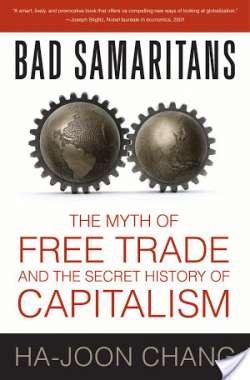
"Lucid, deeply informed, and enlivened with striking illustrations." -Noam Chomsky One economist has called Ha-Joon Chang "the most exciting thinker our profession has turned out in the past fifteen years." With Bad Samaritans, this provocative scholar bursts into the debate on globalization and economic justice. Using irreverent wit, an engagingly personal style, and a battery of examples, Chang blasts holes in the "World Is Flat" orthodoxy of Thomas Friedman and other liberal economists who argue that only unfettered capitalism and wide-open international trade can lift struggling nations out of poverty. On the contrary, Chang shows, today's economic superpowers-from the U.S. to Britain to his native Korea-all attained prosperity by shameless protectionism and government intervention in industry. We have conveniently forgotten this fact, telling ourselves a fairy tale about the magic of free trade and-via our proxies such as the World Bank, International Monetary Fund, and World Trade Organization-ramming policies that suit ourselves down the throat of the developing world. Unlike typical economists who construct models of how the marketplace should work, Chang examines the past: what has actually happened. His pungently contrarian history demolishes one pillar after another of free-market mythology. We treat patents and copyrights as sacrosanct-but developed our own industries by studiously copying others' technologies. We insist that centrally planned economies stifle growth-but many developing countries had higher GDP growth before they were pressured into deregulating their economies. Both justice and common sense, Chang argues, demand that we reevaluate the policies we force on nations that are struggling to follow in our footsteps.
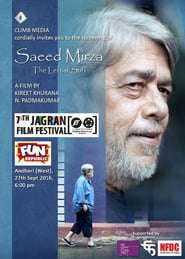
A portrait of independent filmmaker Saeed Mirza best known for cult arthouse films that tackle socio political tensions in India.
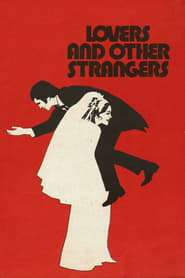
Mike Vecchio and Susan Henderson are preparing for their upcoming wedding. However, they seem to be the only two people at the wedding that are happy. Mike's brother Richie and his wife Joan are going through a divorce, which is upsetting his overly devout Catholic mother Beatrice. Also, Susan's father is carrying on an affair and her sex starved older sister Wilma is going through her troubles with her husband Johnny. All this is going on while Mike's best friend Jerry is trying to bed the maid of honor, Susan's cousin Brenda.